
Hyundai has revealed the fifth-generation Tucson, and while the boxier exterior is grabbing headlines, the more consequential change is buried inside the cabin — one that won't photograph well but matters more than any styling update.
The 2027 Tucson is the first mainstream Hyundai model to fully adopt Pleos Connect, the company's next-generation infotainment platform, replacing the outgoing model's twin-curved display setup entirely.
A Different Kind of Screen
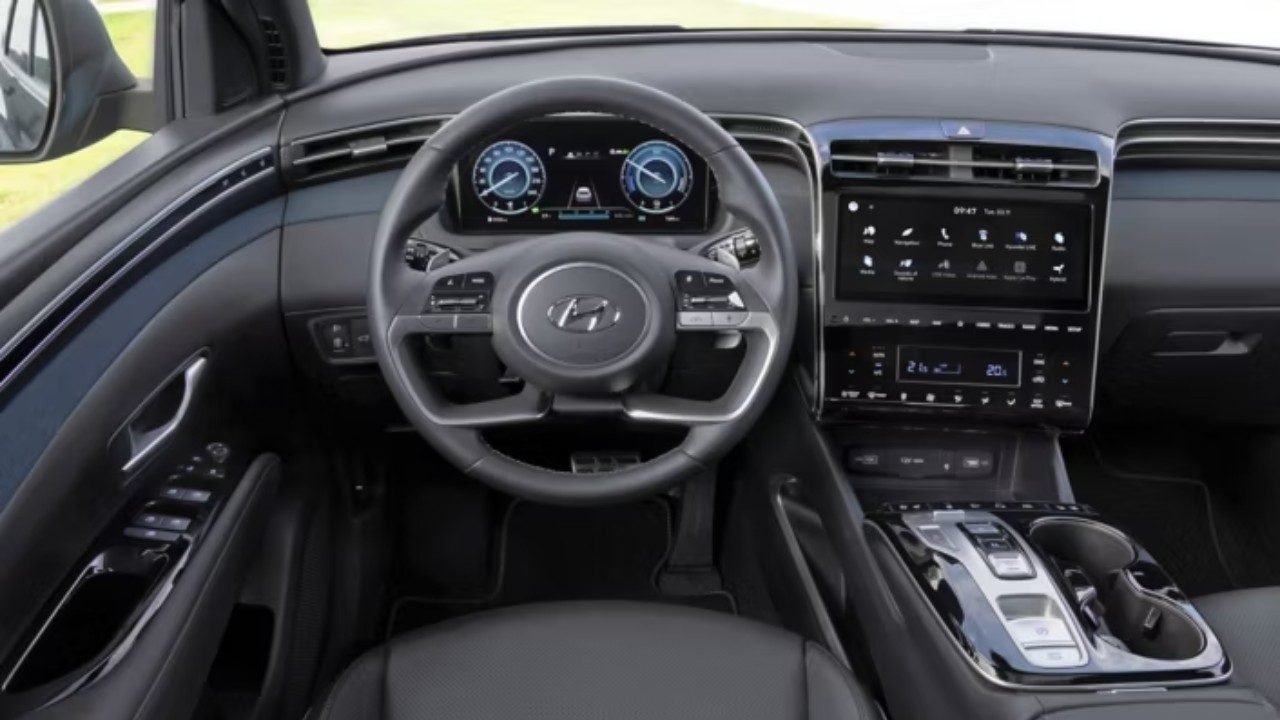
Hyundai Motor Group unveiled Pleos Connect back in April 2026, and the Tucson is now one of its first real-world showcases outside Korea's Grandeur sedan. The new setup pairs a large, tablet-like central touchscreen — expected in the 17-inch range based on its Grandeur deployment — with a slim digital instrument cluster mounted close to the windscreen.
Here's the detail that separates this from a typical infotainment refresh. Pleos Connect runs on Android Automotive OS, not the more familiar Android Auto that many rival brands offer. That distinction matters more than it sounds.
Why the Underlying Software Matters
Android Auto is essentially a phone-mirroring protocol — it projects your smartphone's interface onto the car's screen and needs a connected phone to function at all. Android Automotive OS runs natively on the vehicle's own hardware, independent of any paired device.
That architecture unlocks something phone-mirroring can't: genuine over-the-air software updates delivered throughout the car's ownership lifecycle, the same way a smartphone receives updates years after purchase. New features, improved voice AI, or updated navigation algorithms can arrive without a dealership visit.
Underpinning all of this is a zonal electrical and electronic architecture, combining a high-performance vehicle computer with zone-specific controllers. In plain terms, it decouples hardware development from software development — letting Hyundai push meaningful updates without waiting for the next physical model refresh.
What Else Changed Inside and Out
The redesigned cabin drops the previous curved dual-screen arrangement for this centrally mounted setup, alongside a new two-spoke steering wheel and orange-toned ambient lighting contrasted against light-coloured leather upholstery. Physical controls remain at the base of the screen for climate and media functions — Hyundai hasn't gone fully touch-only.
Outside, the Tucson grows to 185 inches in length, adding 2.3 inches over the outgoing model, with a wider track and a wheelbase stretched to 109.6 inches. The added dimensions translate into more than an inch of extra rear headroom and wider-opening rear doors. Styling follows Hyundai's "Art of Steel" design language — full-width LED light bars, vertical H-shaped daytime running lights, and squared-off body panels replacing the previous generation's softer curves. A rugged XRT off-road variant was revealed alongside the standard model.
Why This Matters Beyond One SUV
Hyundai Motor Group is targeting roughly 20 million Hyundai, Kia and Genesis vehicles equipped with Pleos Connect by 2030 — a genuinely large-scale rollout across the group's entire portfolio, not a one-model experiment.
For context on how this connects closer to home, Kia's upcoming Sorento — set to launch in India on September 4 — is debuting its own AI Assistant built on similar Live Generative AI technology from the same broader Hyundai Motor Group software push. That's a signal this software transition isn't staying confined to Korea and global markets; pieces of it are already filtering into vehicles headed for Indian showrooms.
Hyundai hasn't confirmed powertrain specifications or pricing for the new Tucson yet, and the SUV isn't currently sold in India. But the underlying software architecture debuting here is worth watching regardless — it's the clearest sign yet of where Hyundai Motor Group's mainstream lineup, globally and eventually locally, is headed.
Have a tip on India's auto and EV space? Write to us at contact@techyrobber.com