
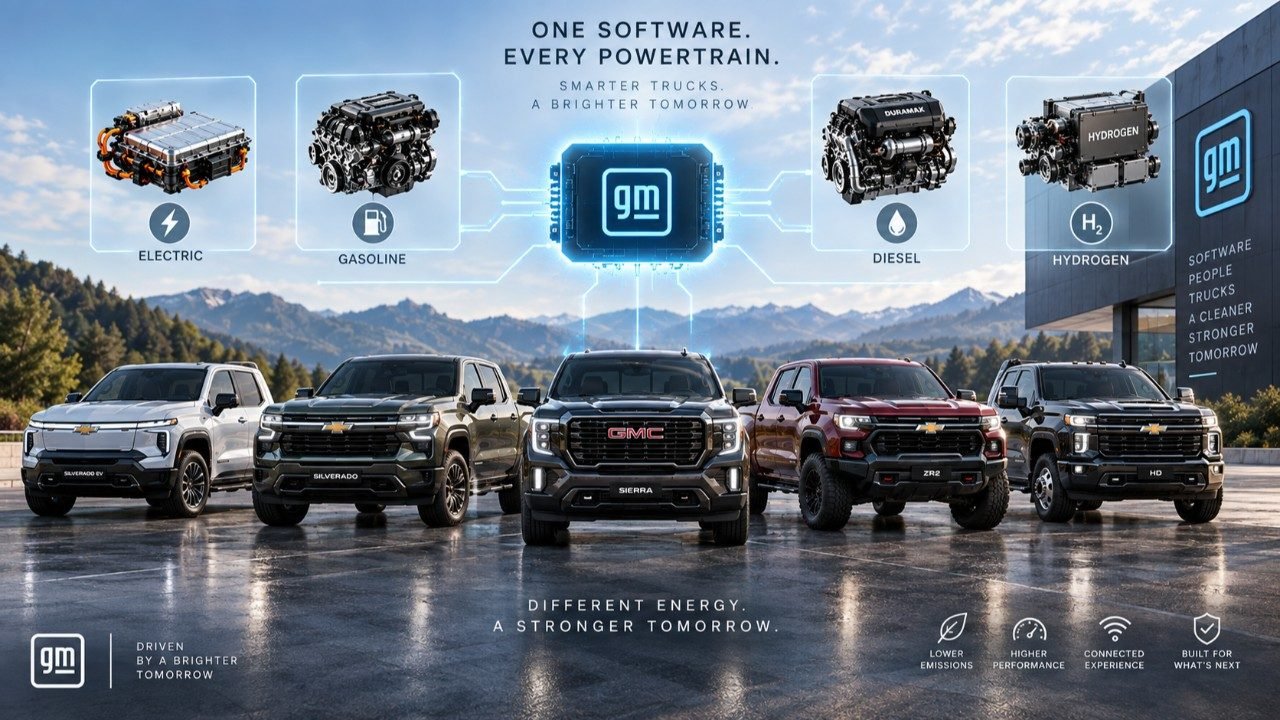
Most automakers still treat electric and combustion vehicles as running fundamentally different software experiences under the hood. General Motors just took a genuinely different approach: a single scalable infotainment platform that works identically across electric, gasoline, and diesel versions of the same truck.
The new interface debuts on the 2027 Chevrolet Silverado and GMC Sierra light-duty pickups, GM confirmed, with plans to extend it across the company's broader portfolio afterward.
Why Building One Platform For Three Powertrains Is Genuinely Hard
Here's the technical challenge most companies avoid by keeping EV and combustion software separate. Electric and combustion vehicles have fundamentally different underlying data — an EV's dashboard needs to communicate battery state, charging status, and range differently than a combustion truck needs to communicate fuel level and towing capacity. Building genuinely shared software architecture that adapts intelligently to whichever powertrain sits underneath it, rather than running separate codebases for each, is considerably more engineering work upfront, but pays off in maintenance and feature-rollout speed over the vehicle's life.
GM's framing leans into that trade-off directly: a single scalable foundation, adapted per powertrain rather than duplicated across them.
What The Interface Actually Does Differently
The redesigned home screen uses a split-view layout, pairing a large interactive map alongside trailering metrics, fuel data, or media content depending on what the driver needs in that moment. Instrument cluster layouts are described as "mode-aware" — automatically adjusting what information gets prioritised based on whether the truck is actively trailering, off-roading, or running GM's Super Cruise hands-free driving system.
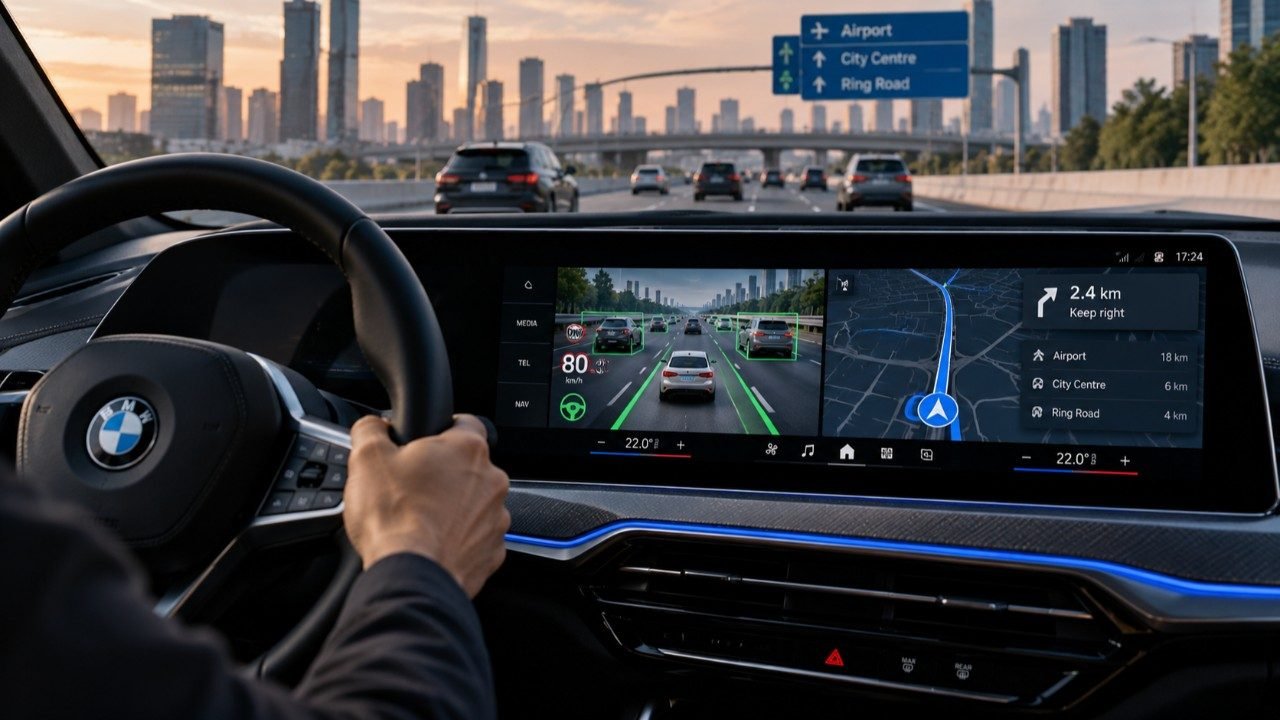
That Super Cruise integration is where the software gets genuinely interesting from a safety-communication standpoint. When Super Cruise is active, the system renders a real-time 3D visualization showing surrounding vehicles, lane markings, and other road objects — conceptually similar to the transparency approach we've covered with BMW's new Maps and Driver Assistance system, where showing a driver exactly what the vehicle perceives builds trust in automated features rather than leaving decisions unexplained.
Built For Smartphone-Level Expectations
GM is positioning the update around a specific comparison: convenience and customisation similar to what drivers already expect from their phones. Deeper integration with Android Auto and Apple CarPlay is part of that push — rather than treating third-party phone software as a separate, walled-off mode, the new interface aims for tighter native-feeling integration between GM's own truck-specific features and smartphone apps running alongside them.
Over-the-air update capability is built into the platform from the outset, meaning the interface itself — not just individual apps or maps — can evolve after a truck has already been sold, adding features, refining layouts, and adjusting functionality throughout ownership rather than locking in whatever ships on day one.
A Genuine Organisational Change Behind the Product
Here's a detail that signals this isn't just a marketing refresh. GM has restructured its digital experience operations to sit under design leadership rather than software engineering specifically, led by a former Apple and Google executive. That's a meaningful organisational signal — treating in-car software primarily as a user-experience design problem, the same discipline that shapes consumer smartphone interfaces, rather than purely as a backend engineering exercise.
Why GM Is Starting With Its Biggest-Volume Vehicles
The Silverado and Sierra aren't a small testing ground. GM reported a combined 593,065 light-duty Silverado and Sierra deliveries in the US during 2025 alone, with GM holding the full-size pickup segment lead for six consecutive years. Rolling out a genuinely new software architecture on the vehicles carrying the most volume — rather than starting with a low-volume flagship or niche EV — puts real pressure on GM to get the execution right immediately, since any rough edges will be experienced by hundreds of thousands of owners rather than a small early-adopter base.
Timeline for Actual Availability
The first 2027 GMC Sierra trucks with this interface are expected at dealerships before the end of 2026, while Chevrolet has said Silverado pricing and availability details will follow later in the year — meaning the Sierra reaches customers first, with the Silverado's rollout trailing slightly behind.
Why This Approach Matters Beyond One Truck Line
GM's unified-platform strategy sits alongside a broader industry shift we've tracked closely — Hyundai's Pleos Connect, Mahindra's MAIA, MG's ADAPT, and now BMW's Maps and Driver Assistance system all reflect automakers treating software as a genuinely ongoing product rather than a fixed, one-time feature locked to a specific model year. What makes GM's approach specifically notable is the powertrain-agnostic design — most competitors have built separate software stacks for their EV and combustion lineups, treating them as fundamentally different product lines rather than variations on one underlying platform.
If GM's approach proves genuinely easier to maintain and update across its full range, expect other manufacturers currently running separate EV and combustion software architectures to eventually follow the same consolidation path — the maintenance and development cost savings of one shared platform, rather than several parallel ones, tend to become difficult to ignore once a competitor demonstrates it working at scale.
Have a tip on India's auto and EV space? Write to us at contact@techyrobber.com