
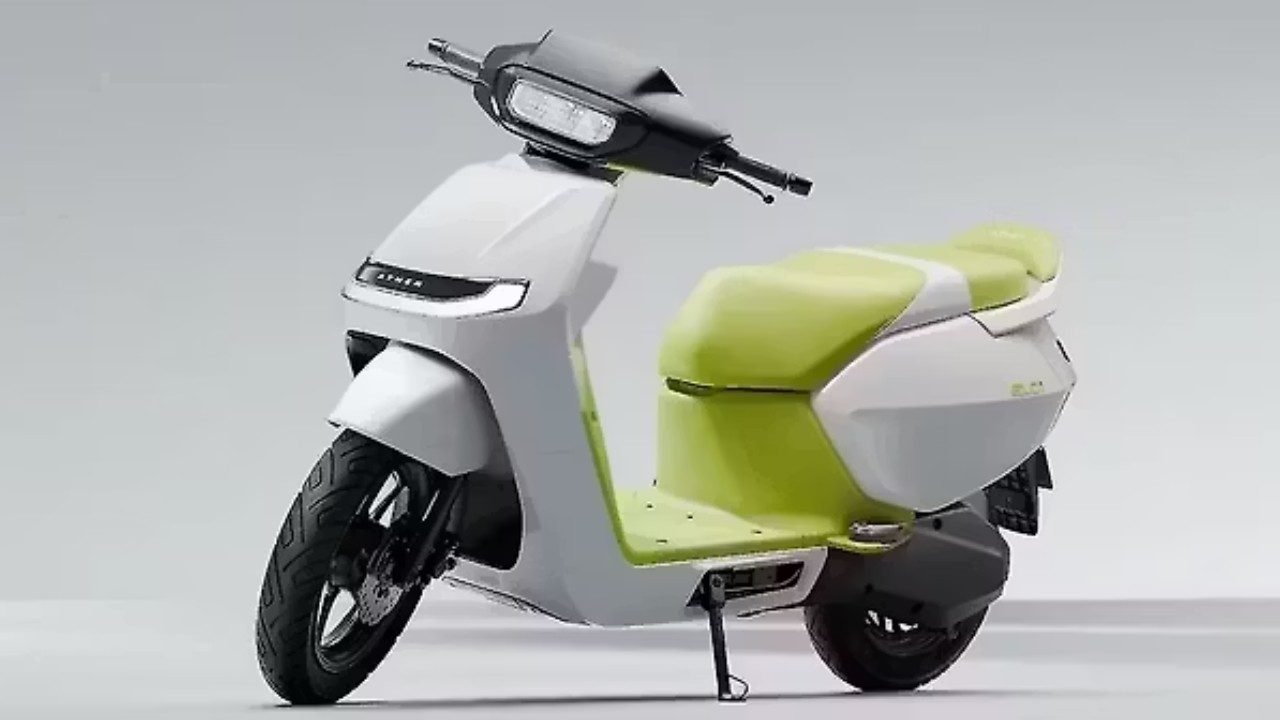
Every electric scooter Ather Energy has ever sold has used plastic body panels. That changes with the Konarc, and the shift says a lot about where the company is headed next.
Ather CEO Tarun Mehta confirmed the metal body detail in a teaser video posted ahead of the scooter's August 29 launch at Ather Community Day in Bengaluru. The clip shows magnets sticking to sections of the scooter's exterior — about as unambiguous a confirmation as a teaser can offer.
Why Switching to Metal Is a Real Engineering Decision
This isn't a cosmetic tweak. Metal body panels bring genuine durability advantages over plastic: dents are easier and cheaper to fix, and insurance costs on panel replacement typically run close to half of what plastic panels cost to replace.
Currently, the Bajaj Chetak is the only other major electric scooter in India built with full metal body panels. Ather's own design philosophy has leaned into plastic for weight and cost reasons, so pivoting to metal for the Konarc marks a genuine change in engineering priorities, not just an aesthetic choice.
There is a trade-off, though. Metal adds weight. For reference, the Ather 450X currently weighs 108-111kg depending on battery pack size, while the metal-bodied Bajaj Chetak comes in around 125kg. Expect the Konarc to land somewhere in that heavier territory once official numbers are out.
The Bigger Story: A New Platform
Here's what makes the Konarc more than just Ather's third product. It's the first production scooter built on the company's entirely new EL platform — described by Ather as its first ground-up vehicle architecture since the original 450 launched.
That's a significant claim. A new platform isn't just a new scooter; it's the foundation Ather plans to build multiple future models on, aimed at reaching a wider, more price-sensitive segment of the market than the performance-focused 450 series or the family-oriented Rizta.
What We Know About the Hardware So Far
Some technical details have already leaked or been confirmed. The Konarc is expected to retain a swingarm-mounted motor similar to the 450 series, likely tuned for smoother power delivery rather than outright performance. It's expected to run a conventional telescopic fork up front paired with a monoshock at the rear, a 14-inch front wheel with a disc brake, and a 12-inch rear wheel on a drum brake.
On the tech side, expect a TFT instrument console with Bluetooth connectivity, turn-by-turn navigation, call and SMS alerts, and Ather's AtherStack 7 operating system — the same software backbone running across the brand's existing lineup.
Reported variant lineup includes four "S" trims and two "Q" trims (SR1 through SR4, and QR2, QR3), based on details from Team-BHP's reporting.
Where It's Built and What It Costs
The Konarc will initially roll out of Ather's Karnataka manufacturing base, with production later expanding to a new Maharashtra facility once that plant becomes operational in 2027.
Expected pricing sits between Rs 1 lakh and Rs 1.25 lakh, positioning the Konarc below both the Rizta (starting at Rs 1.21 lakh) and the 450 range (starting at Rs 1.28 lakh). At that price, it will go up directly against the Bajaj Chetak C2501, the TVS iQube, and the Vida VX2.
Why the Timing Matters
Ather has been running up against production limits, not demand limits. CEO Tarun Mehta recently said the company could have sold around 15,000 additional units had manufacturing kept pace with orders. A new, more affordable platform aimed at the high-volume commuter segment is a direct response to that gap — and a metal body may be exactly the durability signal needed to win over buyers who've stuck with traditional scooters like the Honda Activa for reliability reasons alone.
Have a tip on India's auto and EV space? Write to us at contact@techyrobber.com