
Most carmakers build separate platforms for separate powertrains — one architecture for petrol and diesel, another for EVs, sometimes a third for hybrids. JSW MG Motor India is betting that approach is unnecessarily expensive, and today's Hector Tomahawk launch is the first real test of that bet.
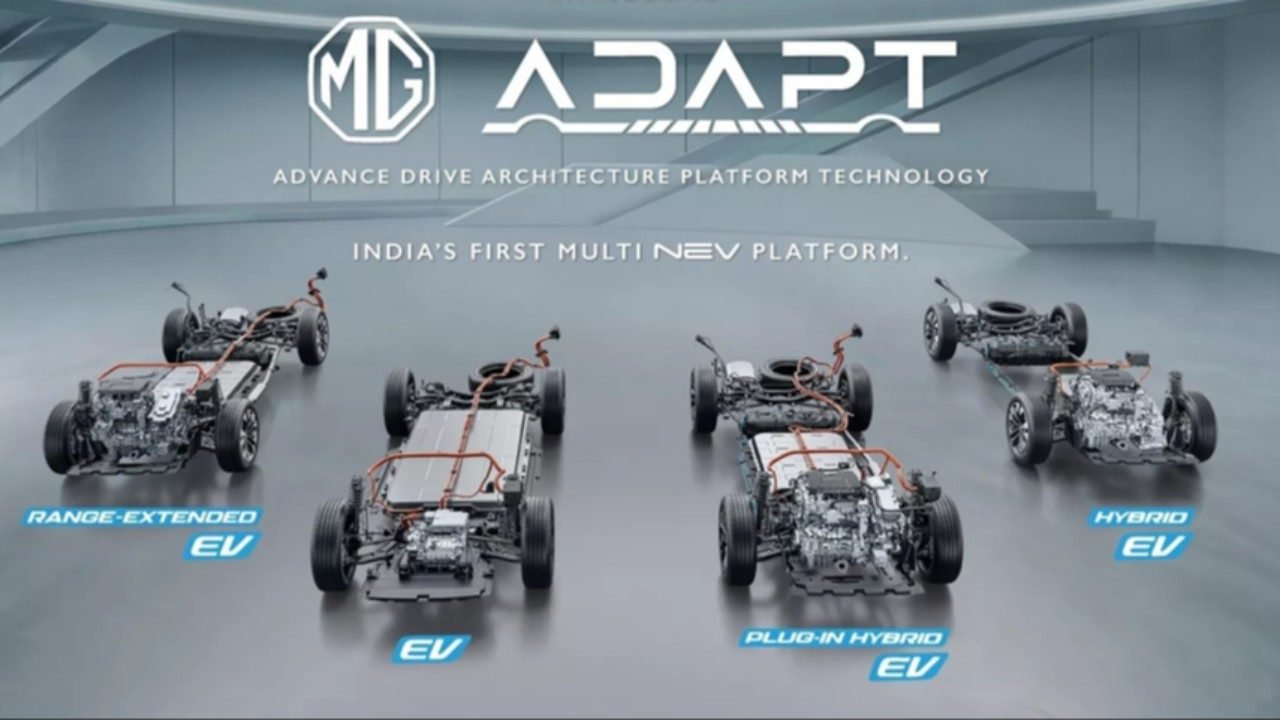
The Tomahawk is the first production vehicle built on MG ADAPT — Advance Drive Architecture Platform Technology — a single modular base engineered to carry battery-electric, hybrid, plug-in hybrid, and range-extender powertrains without a ground-up redesign for each.
Why One Platform for Four Powertrains Actually Matters
Here's the engineering logic. A typical automaker developing four different powertrain types would traditionally need four distinct platforms, each with its own structural engineering, its own supplier relationships, its own manufacturing tooling. That's expensive, and the cost inevitably flows into the price customers pay.
JSW MG Motor India Managing Director Anurag Mehrotra framed the strategic upside directly when ADAPT was first unveiled: a shared architecture makes the company more capital-efficient, which in turn supports more affordable pricing on the vehicles that come out of it. Today's Tomahawk launch, with its EV starting at Rs 19.49 lakh and a Battery-as-a-Service option dropping that to Rs 13.99 lakh, is the first real pricing data point for whether that promise holds up.
The Component at the Heart of the System
The technical core of ADAPT is what MG calls a 10-in-1 Intelligent Electric Drive Unit — a single compact system that folds several separate functions into one integrated package, aimed at improving both efficiency and packaging space within the vehicle.
Depending on driving conditions, the system can automatically switch between different operating modes: a Pure EV mode where only the electric motor drives the wheels, a Series Hybrid mode where the petrol engine generates electricity that powers the motor, and a Parallel Hybrid mode where both petrol engine and electric motor contribute to propulsion directly. That kind of automatic mode-switching is what allows the same underlying hardware to serve dramatically different customer needs — a full EV, a fuel-sipping hybrid, or a long-range PHEV — without redesigning the powertrain from scratch each time.
What This Unlocks for Range
One of the more striking claims tied to ADAPT is the potential for over 1,000km of combined range on PHEV variants, achieved by intelligently switching between electric propulsion and the combustion engine depending on driving conditions rather than relying on a single power source throughout a trip.
That's a genuinely different approach to range anxiety than simply stuffing in a bigger battery. It sidesteps the weight and cost penalties that come with oversized battery packs, instead using the combustion engine as a natural extension of range once the electric-only distance is exhausted.
Why Today's Launch Is the Real Test
Architecture announcements are common in the auto industry — plenty of platforms get unveiled with grand promises and then take years to show up in an actual showroom, if they show up at all. What makes today meaningful is that ADAPT has now produced its first real product, with real pricing, real specifications, and real delivery dates attached.
The Tomahawk arrives in both EV and PHEV form simultaneously, which is itself a demonstration of the platform's core pitch — the same underlying vehicle, genuinely differentiated at the powertrain level, launched together rather than staggered years apart.
What Comes Next
MG has confirmed more ADAPT-based models are planned through FY2026-27, extending the architecture across more of the company's future lineup. How well the Tomahawk performs in the market — on pricing, on real-world efficiency, on that ambitious range claim — will likely determine how aggressively JSW MG leans into ADAPT for the rest of its India roadmap.
For an industry where platform-sharing usually means visually similar models wearing different badges, MG is testing something more ambitious: one engineering foundation, genuinely different vehicles, launched at the same time. Today's numbers are the first real evidence of whether that idea actually works.
Have a tip on India's auto and EV space? Write to us at contact@techyrobber.com