
India's helmet manufacturing has not always had a reputation for cutting-edge engineering. Axor, the premium arm of Vega Auto, is making a case that this needs to change.
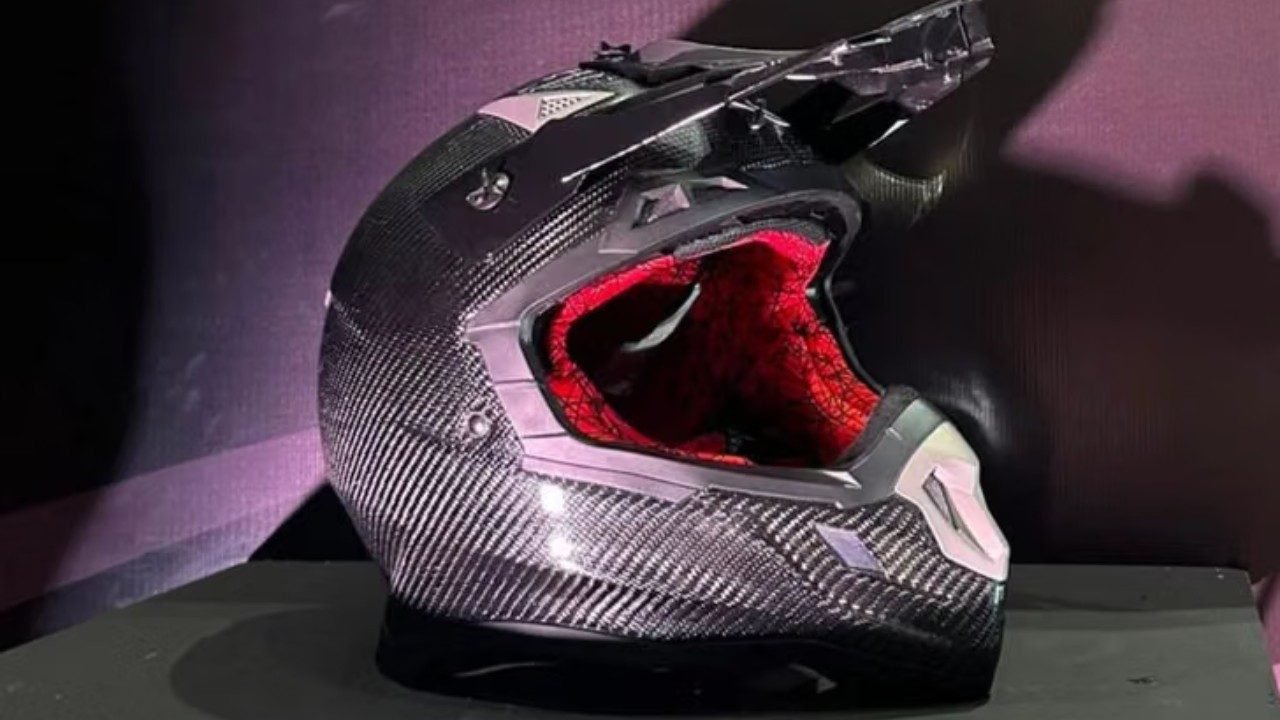
The brand has launched the MX Carbon, an off-road motocross helmet it claims is the world's lightest triple-certified helmet on the market. It weighs approximately 1,050 grams, give or take 50 grams depending on shell size, and carries ISI, DOT and ECE 22.06 certification simultaneously — a combination few helmets anywhere manage to hit while staying this light.
Why the Weight Number Actually Matters
A helmet's weight isn't just a spec sheet number for off-road riders. Motocross and technical terrain riding puts sustained strain on the neck over long sessions, and every gram sitting on top of a rider's head compounds that fatigue across hours in the saddle.
Axor built the MX Carbon specifically around solving that problem, without cutting corners on certification. For comparison, its closest rival, the KYT Skyhawk, weighs 1,200 grams, costs more at around Rs 27,000, and doesn't carry the same certification depth.
Where It's Actually Built
Here's the part worth paying attention to. This isn't an imported shell with an Indian sticker slapped on. The MX Carbon is designed and manufactured entirely at Vega Auto's facility in Belagavi, Karnataka.
Vega has been working with carbon fibre since 1998, building up nearly three decades of composite manufacturing experience before this helmet came together. According to the company, it recently invested close to Rs 2 crore specifically to expand its composite manufacturing capabilities, and current production capacity for composite helmets now runs at three times what it was back in 2020.
How It Actually Gets Made
The construction process is layered and deliberate. Multiple strands of carbon fibre, woven together with Kevlar and fibreglass, form the starting material. These sheets go into a mould, get covered with resin, and are shaped using a balloon moulding process to form the helmet shell.
Unlike Axor's other helmets, which get stickers applied and locked in with a lacquer coat under UV light, the MX Carbon skips that step entirely — just a clear coat and the required certification stickers go on top, keeping the carbon-fibre weave visible.
Before any unit reaches a rider, it goes through drop tests, a field-of-view test, a pellet gun test, and several other checks required to clear certification. Axor even demonstrated confidence in the shell's strength by hanging a 160kg motorcycle from the helmet's straps without any failure.
What Girdhari Chandak Had to Say
Girdhari Chandak, Managing Director of Vega Auto, framed the challenge as one of precision rather than just raw material choice: "The engineering challenge with the MX Carbon was not simply to make a lighter helmet. It was to optimise the material, construction and manufacturing process to achieve a significantly reduced weight while meeting the required certification standards."
Pricing and Availability
The Axor MX Carbon is priced at Rs 20,060 and is currently available in Medium, Large, XL and 2XL sizes.
For a segment where imported lightweight composite helmets typically carry a steep price premium, an Indian-manufactured option undercutting the competition on both weight and price is a genuinely rare combination — and a strong signal of how far domestic composite manufacturing has come.
Have a tip on India's auto and EV space? Write to us at contact@techyrobber.com