
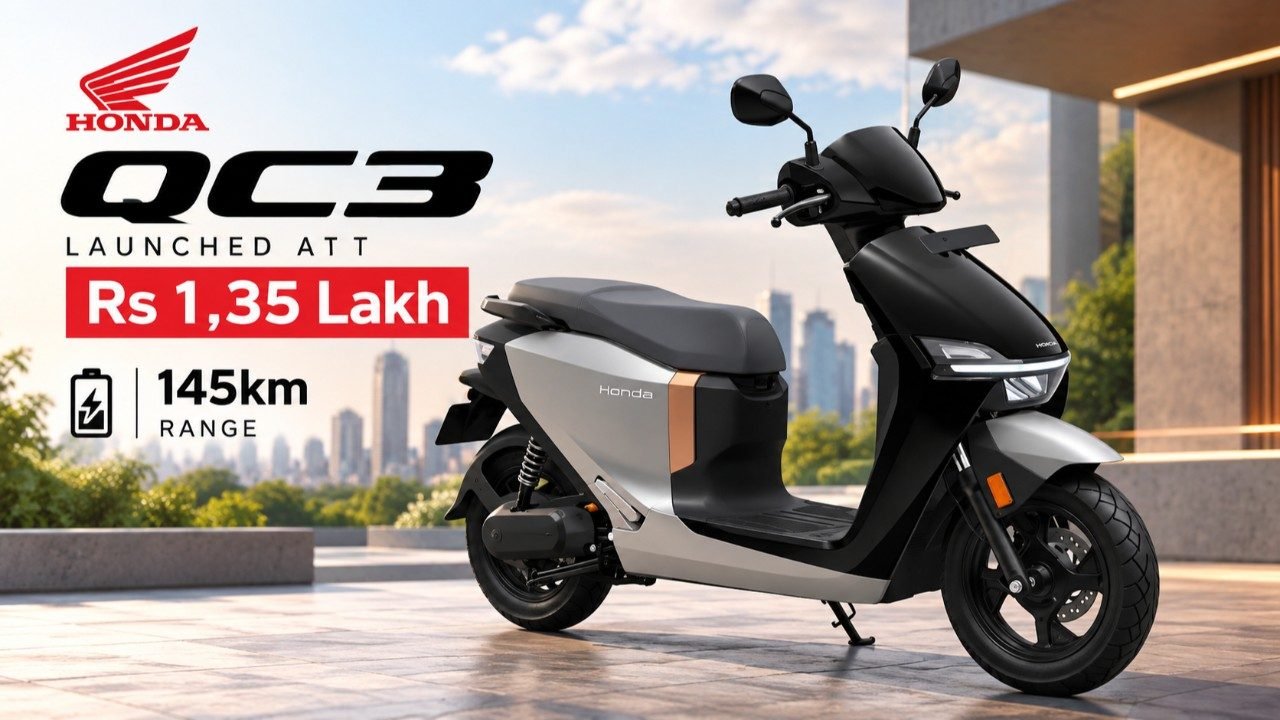
Honda has launched the QC3 electric scooter in India at Rs 1.35 lakh, ex-showroom Delhi — the company's third dedicated electric two-wheeler after the QC1 and Activa e:. It's a genuinely more practical product than what came before it, but it arrives at a moment when Honda's actual position in India's electric scooter market remains genuinely weak.
A Real Practicality Step Up From The QC1
Here's what actually separates the QC3 from Honda's existing entry-level EV. Honda has fitted a 3kWh battery, delivering a certified IDC range of 145km — a meaningful jump over the QC1's smaller 1.5kWh pack. Charging is faster too: 0-80% in 2 hours 40 minutes, against the QC1's 4 hours 30 minutes for the same charge level, with a full charge taking roughly 4 hours versus the QC1's 6 hours 50 minutes.
Storage tells a similar story. The QC3's battery sits under the floorboard rather than under the seat, freeing up 32 litres of underseat space — 6 litres more than the QC1 offers, and genuinely the largest storage capacity in Honda's current India EV lineup.
Where It's Actually Available
Here's a genuinely important limitation worth understanding upfront. The QC3's initial rollout is restricted to just five cities — Delhi, Agra, Cuttack, Surat, and Kollam — sold exclusively through Honda's RedWing dealership network. A wider, phased nationwide rollout is planned to follow, but exact timing for expansion to additional cities hasn't been announced.
What Buyers Actually Get
The QC3 comes in a single variant across four colour options, equipped with a 5-inch TFT display running Honda RoadSync connectivity, Bluetooth, turn-by-turn navigation, and call/SMS alerts. A smart key enables keyless start, paired with all-LED lighting including LED daytime running lights. Braking comes from a front disc and rear drum setup. Bookings are open now for a Rs 5,000 token amount, though Honda hasn't yet disclosed motor output, top speed figures, or delivery timelines.
Where The Pricing Actually Lands
At Rs 1.35 lakh, the QC3 sits close to the TVS iQube 3.1kWh at Rs 1.30 lakh and the Ather Konarc S 161 at Rs 1.45 lakh, while undercutting the Bajaj Chetak C3502's Rs 1.44 lakh. The Hero Vida VX2 Plus 3.1, at Rs 1.03 lakh, remains meaningfully cheaper than all of these. Worth noting: the final launch price came in higher than the Rs 1.15-1.30 lakh range widely expected ahead of launch — Honda has chosen to compete on features and range rather than undercutting rivals on price.
The Uncomfortable Market Reality Behind This Launch
Here's the context that genuinely shapes how significant this launch actually is. In August 2026, Honda's QC1 and Activa e: combined managed just 2,042 units across available electric-scooter sales data — barely 1.1% of that sample. Compare that to the segment leaders in the same period: Bajaj Chetak alone sold 52,248 units, TVS iQube 42,882, Hero Vida 25,558, and Ather Rizta 22,586.
That's a genuinely stark gap for a company that remains India's biggest conventional scooter manufacturer by a wide margin — dominance that clearly hasn't carried over into the electric segment at all. We've covered this exact dynamic before: Japanese two-wheeler brands collectively hold under 1% of India's EV scooter market, and Honda's own numbers here are a concrete illustration of that broader pattern.
Why The QC3 Might Actually Move The Needle
The QC3's improvements over the QC1 — genuinely usable range, faster charging, more storage — address real, specific weaknesses that likely limited the QC1's appeal for family-scooter buyers. A scooter with only 6-7 hours of full-charge time and modest range simply doesn't compete well against rivals offering considerably more convenience for similar money. On paper, the QC3 closes much of that gap.
Why Success Still Isn't Guaranteed
The five-city initial rollout genuinely limits immediate reach, regardless of how competitive the product itself is on paper. A wider rollout, combined with genuinely competitive ownership costs and convenient charging access, will be essential if Honda wants to make any real dent against the segment leaders — none of whom show signs of slowing down. For a brand betting on its reputation and dealer network to eventually convert into electric-scooter market share, the QC3 is a step in the right direction, but a genuinely modest one relative to the scale of ground Honda currently needs to make up.
Part Of Honda's Continued India Product Push
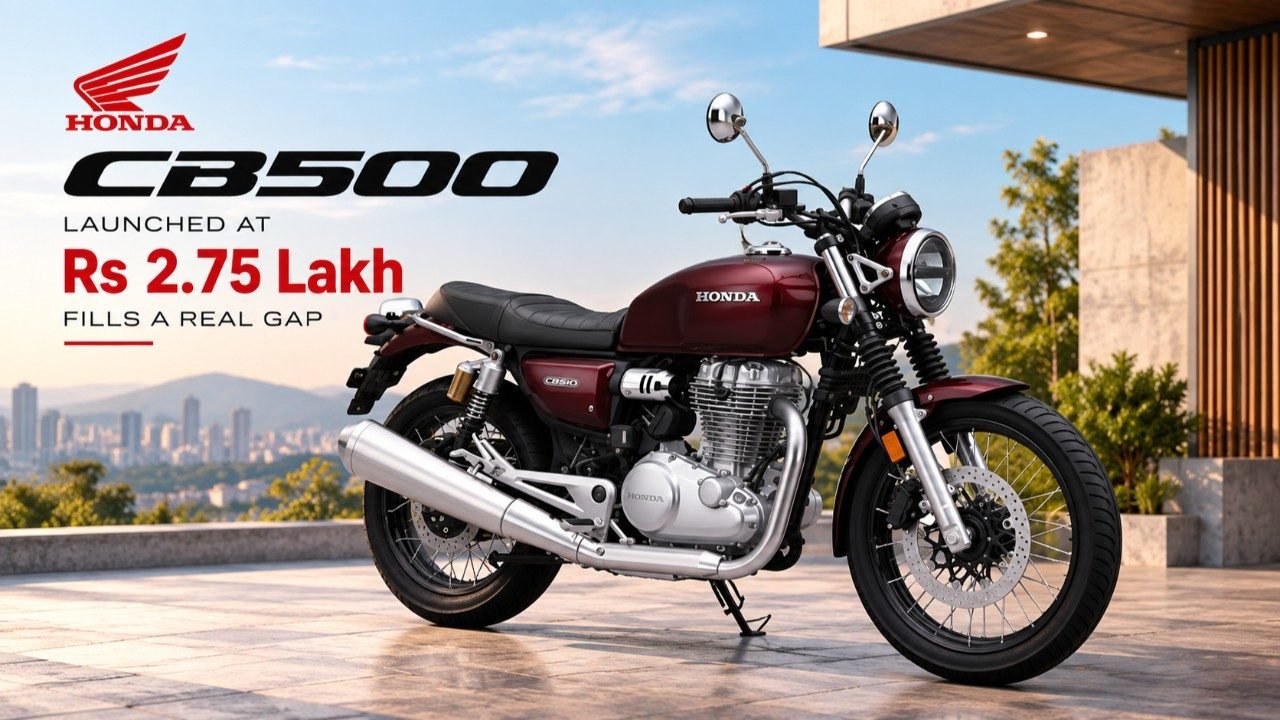
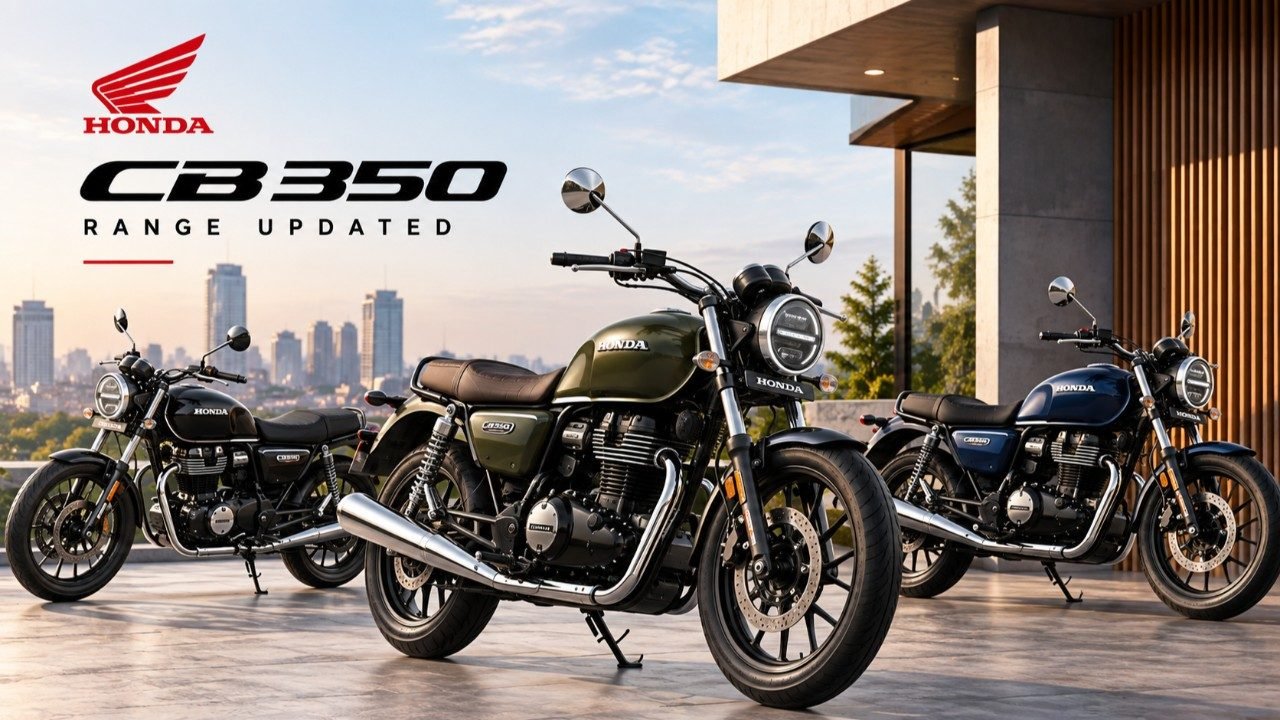
This launch extends the same aggressive rollout pace we've tracked through Honda's July product showcase — the Rebel 300 and ADV160 launched in August, followed by the CB500 and updated CB350 range, and now the QC3 extending that activity specifically into electric scooters. Honda is reportedly also working on an entirely new electric scooter platform separate from the QC and Activa e: lines, suggesting this current generation of EVs may just be a first, incremental step rather than Honda's final answer to the segment.
Have a tip on India's auto and EV space? Write to us at contact@techyrobber.com