
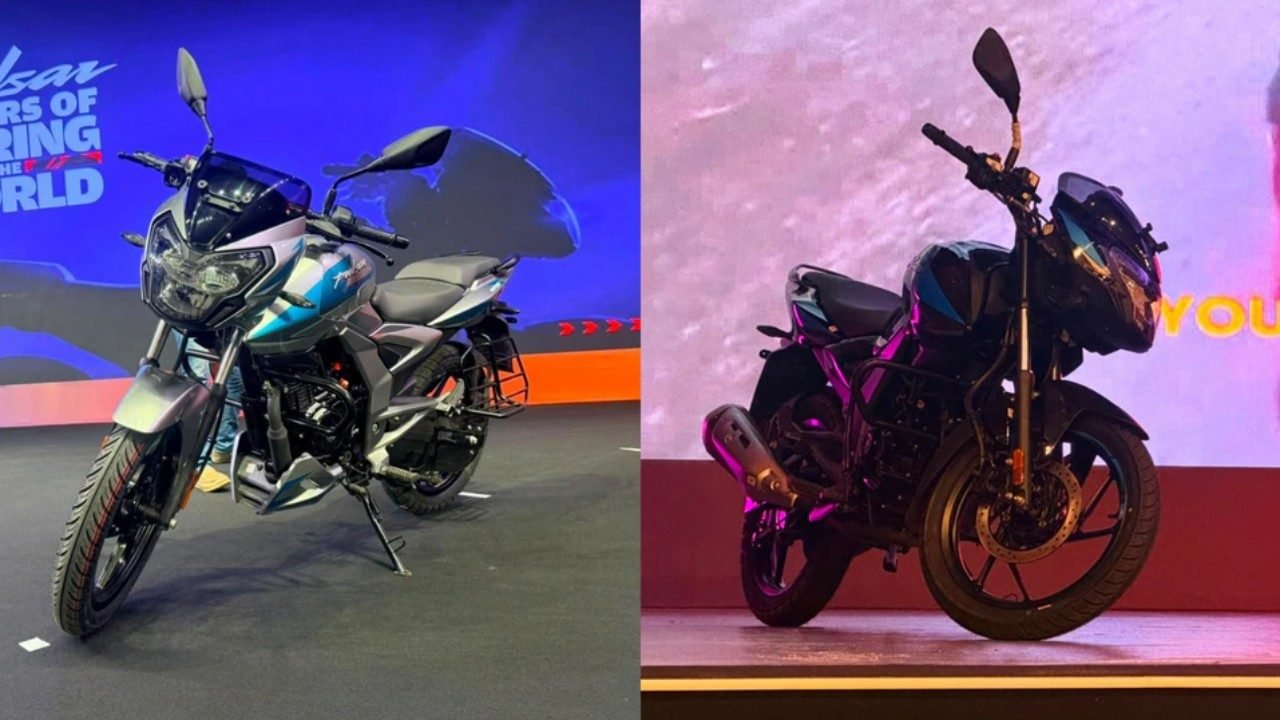
Bajaj Auto has rolled out new-generation versions of two of its longest-running motorcycles, and this isn't the usual colour-and-graphics refresh these nameplates typically get. The new Pulsar 125 and Pulsar 150 arrive with a genuinely new platform underneath them, timed to coincide with the Pulsar brand's 25th anniversary in India.
Prices start at Rs 92,990 for the Pulsar 125 and Rs 1,15,233 for the Pulsar 150, both ex-showroom. Bajaj Auto confirmed the launch is part of a broader 10-model motorcycle portfolio refresh currently underway.
A New Frame Changes Everything
Here's the mechanical headline. Both motorcycles move to an all-new diamond-type frame, with the engine now serving as a stressed member — replacing the outgoing double-cradle chassis architecture these bikes have run for years. That's a fundamental structural change, not a cosmetic one.
The rear suspension setup also shifts from the long-running twin-shock arrangement to a modern monoshock across the range. Combined with the new chassis, this is the kind of update riders can feel every single day, not just notice in a spec sheet comparison.
What's Under the Tank
Both engines have been reworked. The Pulsar 125 runs a 124.58cc single-cylinder air/oil-cooled unit producing 12.1hp at 8,500rpm and 11.4Nm at 6,500rpm — modest gains of 0.3hp and 0.6Nm over the outgoing motorcycle, but paired with a revised five-speed gearbox tuned for better low-speed rideability.
The Pulsar 150 sees a bigger jump, now producing 14hp at 8,500rpm and 14.1Nm, up from roughly 13.25Nm previously. Bajaj's own internal performance index — a power-to-weight metric the company uses to benchmark generational improvements — shows the Pulsar 150 climbing from 93 to 100, and the Pulsar 125 improving from 81 to 93.
Features That Weren't Here Before
The higher-spec Twin Disc variants introduce three selectable riding modes — Rain, Road and Sport — a feature normally reserved for larger, more expensive motorcycles. These same top variants also get an Integrated Starter Generator (ISG) for quieter engine starts, alongside efficiency benefits.
On the tech side, mid and top variants swap the standard LCD console for a 5-inch TFT display with Google Maps integration, LED indicators, hazard lights, and USB Type-C charging. Bajaj's Crawl Tech — a low-speed control feature useful in stop-start traffic — comes standard across the range, even on base variants.
Variant Structure and Pricing Breakdown
The Pulsar 125 comes in Base, Standard and Premium configurations. The Base variant, at Rs 92,990, gets a single seat, coloured LCD display, monoshock, Crawl Tech and an LED headlamp. The Standard single-seat version costs Rs 99,291, with a split-seat Standard variant at Rs 1,00,288. The range-topping Premium split-seat variant runs Rs 1,04,318 and adds the full connected equipment package.
Redesigned bodywork spans both motorcycles — a new LED headlight treatment, revised fuel-tank extensions, an updated dual-tone exhaust, refreshed tail lamp, and redesigned grab rails. Buyers get five colour options across the range.
Why Bajaj Is Doing This Now
Sumeet Narang, President – Marketing at Bajaj Auto, framed this launch as part of a larger strategic shift: the Pulsar range will now be structured around three distinct platforms — the original Pulsar, Pulsar N, and Pulsar NS — each targeting different rider preferences with clearer differentiation between them. "Our 150 and 125 are the second launch in this journey," Narang said, adding that more products are planned in the coming weeks.
The timing matters. Pulsar remains one of India's largest-selling motorcycle families, moving 66,156 units in July, though that's a 17% decline from the same month last year. Bajaj's broader sports motorcycle segment — covering Pulsar, Avenger and Dominar — has fared better, posting roughly 50% year-on-year growth in the April-June quarter. A comprehensive platform reset for two of the family's highest-volume models looks like a direct response to that recent softness in Pulsar's own numbers.
For a nameplate that's spent 25 years evolving mostly through engine tweaks and styling updates while keeping its underlying architecture largely intact, this generational reset is a genuinely bigger deal than Bajaj's typical annual refresh cycle.
Have a tip on India's auto and EV space? Write to us at contact@techyrobber.com