
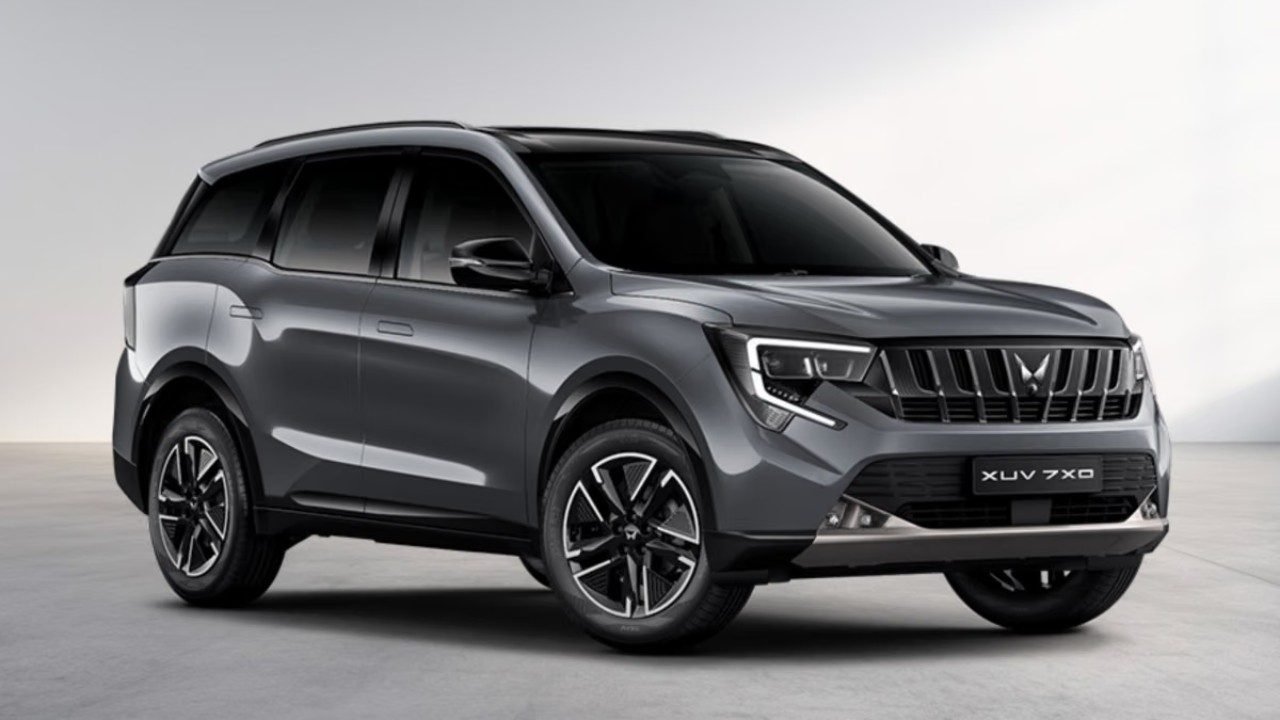
Seven months, seventy thousand units. That's the pace Mahindra's XUV 7XO has kept up since it landed in Indian showrooms in January 2026, and the number tells a genuinely lopsided story about where premium SUV buyers are putting their money right now.
Mahindra launched the XUV 7XO as a comprehensively updated successor to the XUV700, and the sales data since then shows just how quickly it found its footing. The SUV opened with 10,133 units in January, followed by 9,112 in February and 9,210 in March. Sales stayed comfortably above 8,500 units through April, May and June, with May posting 9,338 units, before settling at 8,233 units in July.
A Monthly Average That Beats Every Previous Full Year
Here's the number that puts this run in real context. The XUV700/XUV 7XO family's full-year 2025 average sat at 6,806 units a month. The XUV 7XO's current pace of roughly 9,285 units a month is meaningfully higher than that — and higher than any previous full calendar year the nameplate has ever posted, going back to the original XUV700's 2021 launch.
At this trajectory, Mahindra is well positioned to surpass the XUV700 family's previous best annual sales record before the year is out, a genuinely significant milestone for a nameplate that's been through several years of steady, incremental growth rather than a sudden breakout.
Where It Sits Against the Broader Segment
Within India's roughly 4.5m to 4.8m SUV space, Mahindra currently holds a commanding overall position. The Scorpio range led the segment outright in July 2026 with 16,009 units, with the XUV 7XO following in second at 8,233 units. It's worth noting the Scorpio's number combines both Scorpio Classic and Scorpio N, covering a considerably broader price and customer range than the XUV 7XO's single, more tightly positioned premium offering.
The Real Story Is in the Direct Rival Comparison
Here's where the numbers get genuinely stark. Against its closest direct competitors — the Tata Safari, Hyundai Alcazar, and MG Hector — the XUV 7XO isn't just winning, it's outselling all three combined by a wide margin, and has been since its very first month on sale. In January 2026 alone, the XUV 7XO's 10,133 units dwarfed the Safari's 2,375, the Alcazar's 962, and the Hector's 334 — a combined total of just 3,671 units across all three rivals put together.
That pattern has held steady in the months since, with the XUV 7XO consistently outpacing the combined sales of its three named competitors by a factor of roughly two to one or more, month after month.
What's Actually Driving the Demand
The XUV 7XO's success rests on a familiar formula executed well: a refreshed design that reads more premium than the outgoing XUV700, a meaningfully upgraded cabin, and a stronger feature list, all layered onto a platform and engine range that had already proven itself over several years. Buyers can choose between a 2.0-litre turbo-petrol and a 2.2-litre turbo-diesel, paired with automatic transmissions, and the option of six or seven-seat configurations depending on family size and preference.
Higher variants pack in up to three 12.3-inch screens including a dedicated passenger display, alongside safety equipment stretching to seven airbags, electronic stability control, a 540-degree camera system, and a broader set of driver assistance features than the outgoing XUV700 offered.
Why This Milestone Matters Beyond the Number Itself
There's an added wrinkle worth noting. This sales run has happened even as Mahindra hasn't been manufacturing every variant at full volume — the company initially prioritised higher-end trims, with lower and entry-level variants rolling out more gradually. With the complete variant lineup now reaching dealerships in a phased manner, there's a real possibility the XUV 7XO's monthly numbers could climb further still as availability improves across the full price range.
For a segment where buyers are shelling out serious money on a family SUV, that kind of sustained, broad-based demand — not just a strong launch month followed by a fade — is a genuinely difficult thing for rivals to compete against without a comparably significant product response of their own.
Have a tip on India's auto and EV space? Write to us at contact@techyrobber.com