
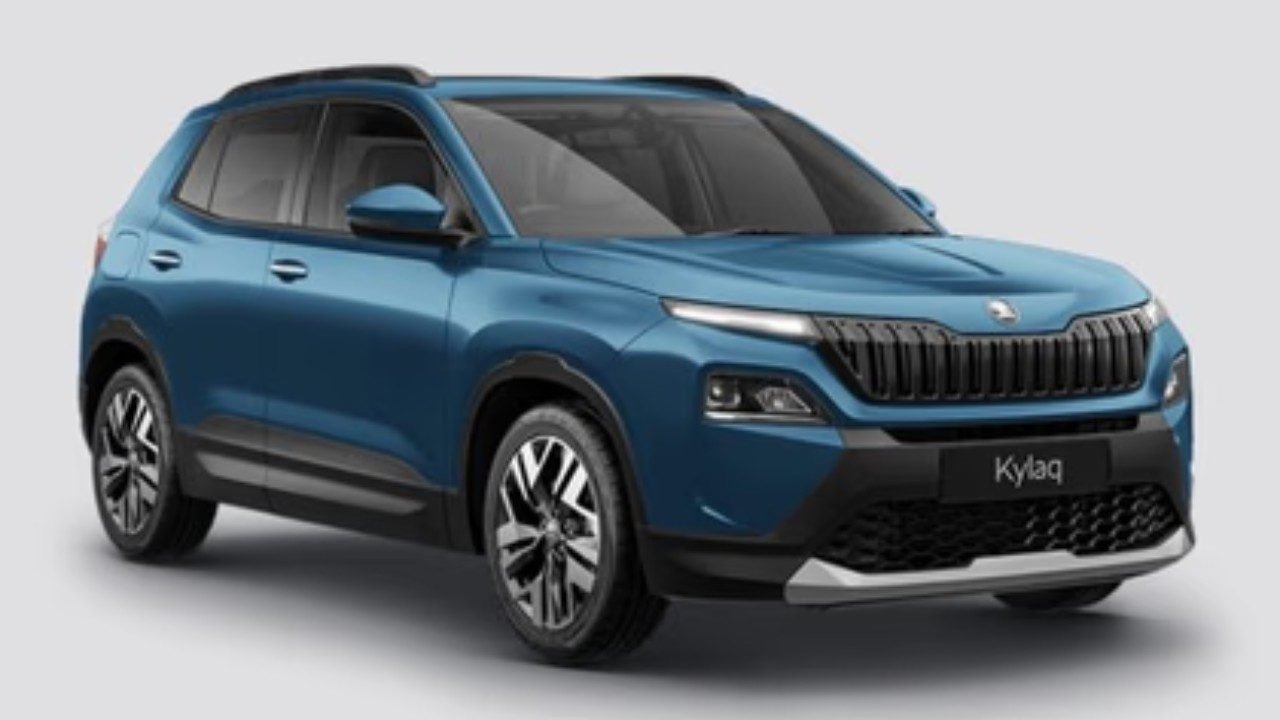
Skoda has laid out its next major product phase for India, and it's built around a name that says exactly what it's meant to do: India 3.0. The programme covers a CNG-powered Kylaq expected in 2027, followed by two entirely new, locally manufactured electric vehicles starting in 2028.
Martin Jahn, Skoda Auto's board member for sales and marketing, confirmed the broad shape of the plan directly to Autocar India, speaking on the sidelines of the updated Slavia's launch: "We know we have to do electric, so we are now thinking about what would be the best option for an electric car in India."
Why a CNG Kylaq Comes First
Here's the sequencing logic worth paying attention to. Rather than leading with an EV, Skoda's next major India product is expected to be a CNG-powered version of the Kylaq, its current best-selling model in the country. That's a pragmatic choice — CNG remains a genuinely popular powertrain option in India's compact SUV segment, offering lower running costs without the range anxiety or charging infrastructure concerns still associated with EVs for many buyers.
Putting CNG on Skoda's best-seller first, ahead of any electric launch, suggests the company is prioritising a powertrain option with proven, immediate demand while its electric strategy continues taking shape in the background.
Two EVs, Two Different Sizes, Two Different Timelines
The electric side of India 3.0 is structured around a 5-seater EV launching first in 2028, followed at a later, unspecified stage by a 7-seater model. Jahn didn't disclose specific technical details for either vehicle, but the underlying platform strategy has been reported previously: an adaptation of Volkswagen Group's China Main Platform (CMP), localised specifically for India and internally referred to as the India Main Platform, or IMP.
That's a meaningful distinction from simply importing an existing global Skoda EV. Building a platform variant tailored to Indian cost structures and market requirements, rather than adapting an already-expensive European platform, is the same approach that's let other manufacturers hit genuinely competitive price points in India's EV segment.
The Investment Question Still Being Worked Out
Here's what remains unresolved. Skoda hasn't officially disclosed the size or structure of its planned investment behind this EV programme, though industry sources suggest a figure in the range of one billion euros. The company is reportedly evaluating multiple ways to fund and execute the plan, including the possibility of bringing in a strategic partner — with earlier reports pointing specifically toward ongoing discussions with JSW Group.
That funding question matters because it directly shapes the credibility of the 2028 timeline. A locally developed EV platform requires genuinely deep, sustained investment in supply chain development, localisation, and manufacturing capability — not a one-time capital injection, but years of coordinated planning.
Why Skoda Is Taking a Slower, More Deliberate Path
Ashish Gupta, Brand Director of Skoda India, has previously framed the company's approach in blunt terms: if Skoda wants to become a genuine EV player in India, it has to happen through local manufacturing, not imports. Imported EVs, in his view, can help build brand awareness, but they can't deliver the sales volumes needed to compete seriously against Tata Motors, Mahindra, Hyundai, and Maruti Suzuki — all of which already have meaningful domestic EV manufacturing in place.
That's a notably different strategy from rivals who've rushed imported EVs to market for early positioning. Skoda appears willing to accept a slower timeline in exchange for a genuinely cost-competitive, mass-market product once it does launch.
What This Means for Buyers Right Now
For anyone currently shopping Skoda's lineup, the practical takeaway is that meaningful electrification is still a few years away on the mass-market side. The CNG Kylaq in 2027 offers the nearest-term new powertrain option, while the first genuinely localised, presumably more affordable Skoda EV won't reach showrooms until 2028 at the earliest — with the larger 7-seater EV following at an unspecified point after that.
For a brand that's built recent momentum in India largely on the back of the Kylaq's success, layering a CNG variant onto that same nameplate before venturing into electric territory looks like a deliberate, low-risk way to keep sales momentum going while the more capital-intensive EV programme continues taking shape behind the scenes.
Have a tip on India's auto and EV space? Write to us at contact@techyrobber.com