
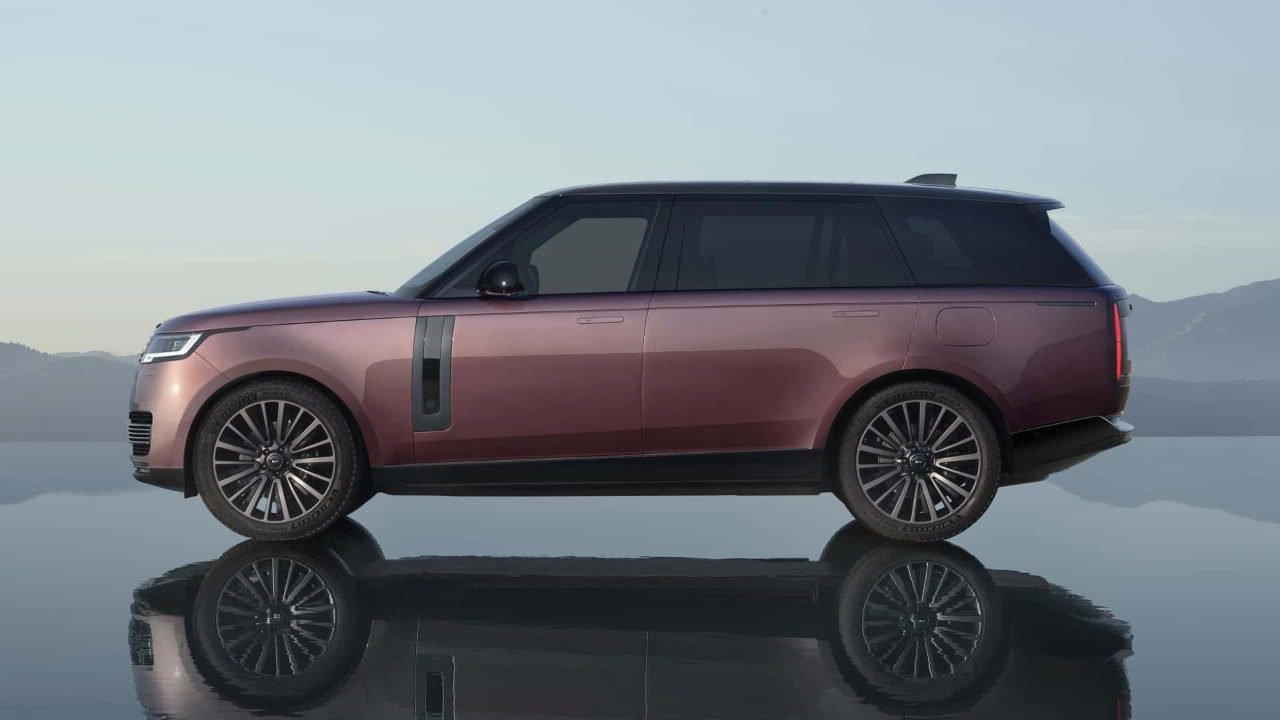
Range Rover has spent 56 years building its reputation on V8s and straight-sixes. That changed today. The Range Rover Electric is officially open for orders worldwide, and the brand's approach to its first EV comes down to one deliberate choice: don't reinvent the icon, just unplug it from petrol.
Built at JLR's Solihull plant in the UK, alongside the existing six- and eight-cylinder Range Rovers on the same aluminium-intensive architecture, the Electric shares the model's imposing proportions and upright profile almost exactly. The visual changes are deliberately restrained — this is a Range Rover that happens to be electric, not a reimagined design language wrapped around a battery.
The Numbers That Matter
Two permanent-magnet motors, one per axle, combine for 542 horsepower and up to 850Nm of torque — more torque than any Range Rover has ever produced, regardless of powertrain. That translates to a 0-60mph time of 4.3 seconds, genuinely quick for a vehicle of this size and weight.
Power comes from a 118.5kWh lithium-ion battery pack running an 800-volt electrical architecture, delivering a WLTP-rated range of up to 372 miles (roughly 599km) — or 333 miles under the US EPA's stricter testing standard. DC fast-charging tops out at 350kW, adding around 220km of range in just 10 minutes, with a 10-80% charge taking approximately 22 minutes.
Pricing Lands Closer to the Combustion Range Than You'd Expect
Here's the detail that stands out most. In the UK, the Range Rover Electric starts at £154,070 — just £6,390 more than a similarly powerful V8 Autobiography model, and less than half the price of a Rolls-Royce Spectre, the closest ultra-luxury EV comparison. In the US, pricing starts at $138,000 (or $140,450 including destination), identical to the V8-powered SE trim, and just $9,100 more than the plug-in hybrid equivalent.
That's a deliberate pricing strategy: rather than positioning the EV as a premium halo product sitting above the rest of the range, JLR has priced it to sit directly alongside the combustion lineup, removing cost as a reason for loyal customers to hesitate.
Every Trim Gets the Electric Option
Unlike some manufacturers that restrict EV powertrains to a single trim level, Range Rover is offering the Electric across its entire trim spread — from the base SE through Autobiography, SV, SV Black, and SV Ultra — in both short- and long-wheelbase body styles. A First Edition variant adds exclusive paint options including Belgravia Green, Santorini Black, and Varesine Blue, paired with Light Cloud Ultrafabrics and Kvadrat interior trim.
North American buyers get built-in NACS compatibility, meaning direct access to Tesla's Supercharger network without an adapter — a practical convenience that removes one of the more common EV ownership headaches in that market.
Extensive Testing Behind the Launch
JLR says the Range Rover Electric has covered more than 1.5 million kilometres of testing and over 250,000 hours of virtual development, spanning conditions from sub-zero Arctic cold to extreme heat. For a nameplate whose reputation rests heavily on genuine off-road capability, that testing regime is aimed squarely at proving the EV can match — or exceed — what combustion Range Rovers have always been known for, rather than just performing well on smooth pavement.
Where It Sits Competitively
At this price point, genuine rivals are thin on the ground. The Mercedes-Benz EQS SUV and the G-Class with EQ Technology are the closest comparisons, alongside the Lotus Eletre, Rivian R1S, and Lucid Gravity — though none carry quite the same brand heritage or price positioning as the Range Rover name.
JLR has reported more than 60,000 "expressions of interest" in the Range Rover Electric ahead of today's order books opening — not confirmed orders, but a meaningful early signal given the brand's customer loyalty figure sits above 70%, among the highest in the luxury SUV segment.
What Happens Next
First customer deliveries are expected to begin in 2027. JLR hasn't announced plans for a three-row version of the Range Rover Electric, and a smaller, related Range Rover Sport Electric is also in the pipeline using a similar powertrain.
For a brand that's built its identity on the sound and presence of a V8, going electric without changing how the vehicle actually looks is a calculated bet — that Range Rover's most loyal customers care more about the badge and the driving experience than about announcing their EV switch through dramatically different styling.
Have a tip on India's auto and EV space? Write to us at contact@techyrobber.com