
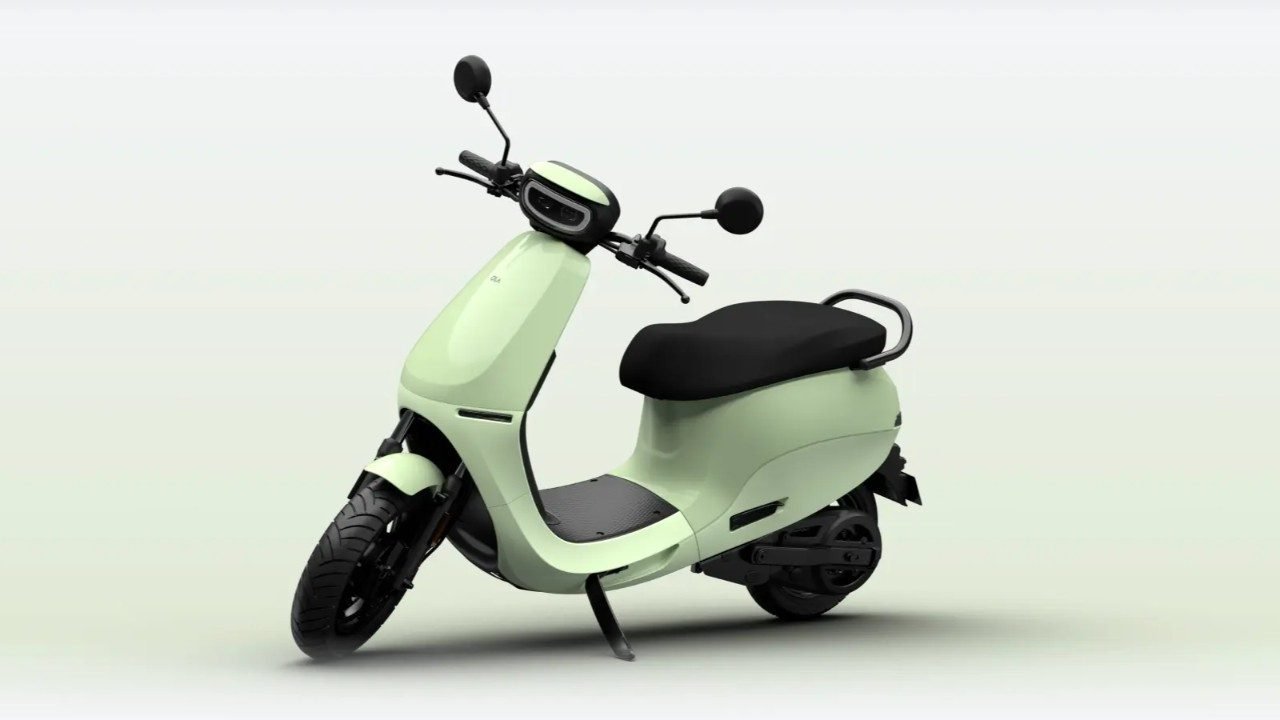
A 5.1kWh battery. A 301km IDC-certified range. A 4kW peak motor. All of it packed into a scooter priced at Rs 99,999. On paper, no other electric scooter near this price point comes close to that range figure — and that gap is worth actually pulling apart, rather than just repeating the headline number.
How the number is even possible
Here's the part that actually explains it: this isn't a case of Ola simply stuffing in a bigger, more expensive battery and eating the cost. The S1Z runs on Ola's own 46-series LFP Bharat Cell, developed at the company's in-house Battery Innovation Centre and manufactured at its own Gigafactory — not sourced from an external supplier.
Battery cells are typically the single most expensive component in any EV. When a company designs, engineers, and manufactures its own cells rather than buying them from a third party, it removes a supplier's margin from the cost stack entirely. That's the actual mechanism behind the aggressive price — not a subsidy, not a loss-leader strategy, but vertical integration cutting out a cost layer most rivals still carry.
The motor tells a similar story. A 4kW peak-output unit is a relatively modest number by scooter standards — this isn't a performance-focused vehicle chasing 0-60 bragging rights. Both variants share the same motor and same 70kmph top speed. Ola isn't spending engineering budget on outright speed; it's spending it on range efficiency and cost control instead.
What the 301km number actually means
Worth being precise here: 301km is an IDC-certified figure, not a guaranteed real-world number. IDC stands for Indian Driving Cycle — a standardised lab test, not a reflection of stop-start city traffic, AC-heavy summer riding, or carrying a passenger and luggage. Real-world range on the 5.1kWh variant will likely land meaningfully lower, the same way it does for virtually every EV's claimed figure worldwide.
That's not a knock specifically on Ola — every manufacturer's claimed number works this way. But a 301km headline inevitably sets rider expectations higher than what daily commuting will typically deliver, and that gap is where buyer disappointment usually starts.
The reliability question this doesn't answer
Here's the part that matters more than the spec sheet. A battery's advertised range means very little if the surrounding ownership experience doesn't hold up — and this is precisely where Ola Electric has faced sustained, public criticism over the past couple of years. Service centre wait times, spare parts availability, and after-sales support have been recurring complaints from existing Ola riders, independent of how any specific model performs on paper.
That history matters here specifically because the S1Z represents a meaningful strategic shift: it's Ola's first model being sold through dealer-operated stores, rather than the company's own retail network. That's arguably an attempt to address exactly the service and accessibility criticism the brand has faced — dealer networks typically bring more localised service points than a smaller number of company-owned outlets.
Whether that shift actually improves the ownership experience is something only time and real customer data will answer. A new retail model on paper doesn't automatically translate into faster repairs or better parts availability on the ground.
Is Rs 99,999 for 301km actually a good deal?
The honest answer is: conditionally. If Ola's LFP cell technology holds up to its claimed longer lifespan — LFP chemistry is generally known for better thermal stability and longer cycle life than the NMC cells common in this segment — and if the dealer-network shift genuinely improves service response times, this is a genuinely strong value proposition, undercutting rivals on both price and range simultaneously.
If either of those two things falls short — degraded real-world range, or the same service friction that's dogged Ola's existing lineup — the headline number stops mattering much to an actual owner dealing with a scooter sitting in a queue for parts.
The bigger industry signal
Beyond one scooter, the S1Z's approach says something about where India's EV segment is heading. Vertical integration — owning your own cell manufacturing rather than sourcing externally — is becoming the mechanism smart pricing plays are built on, not just battery capacity or motor output. Expect more manufacturers to chase in-house cell production for exactly this reason: it's the lever that actually moves price, not marketing.
For buyers, the takeaway is straightforward: judge the S1Z on the engineering logic behind its price, which genuinely holds up — but don't judge it purely on the range number until real owners have logged real kilometres, and until Ola's service reputation either improves or doesn't.
Have a tip on India's auto and EV space? Write to us at contact@techyrobber.com