
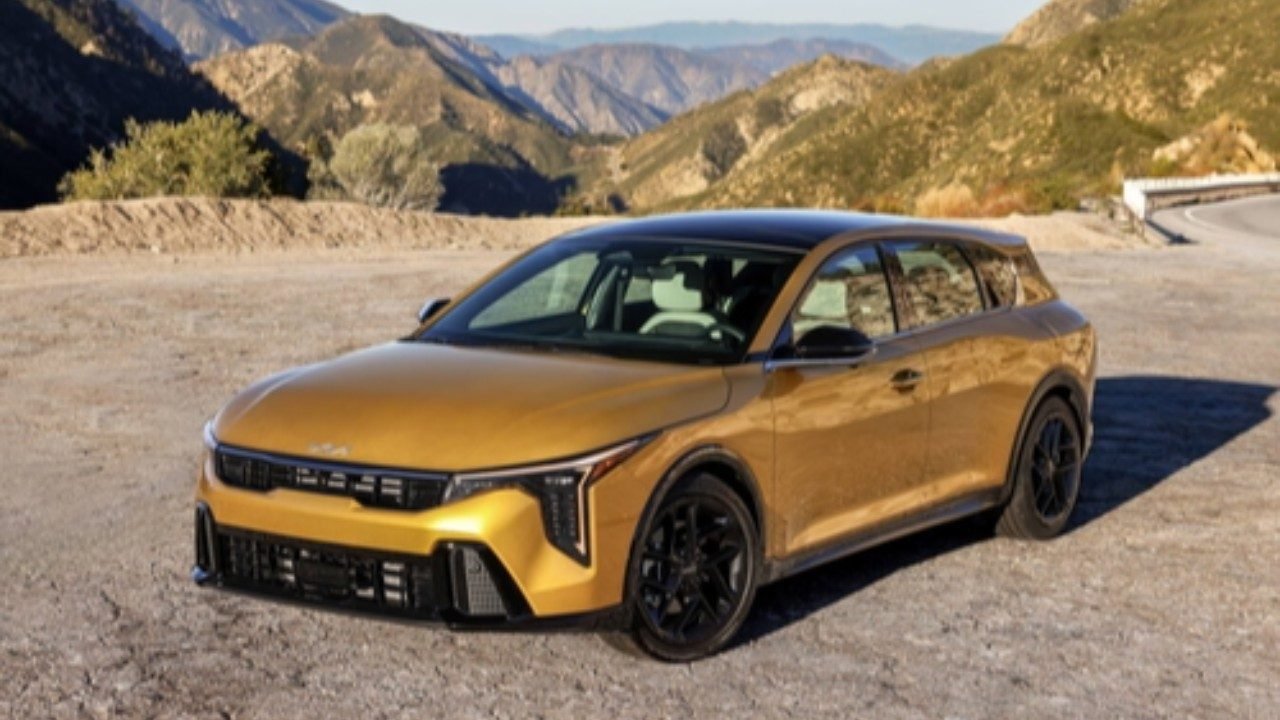
Kia America just posted its best August ever. But bury the headline number, and the more interesting story is what's driving it — and what isn't.
The Korean automaker sold 83,793 vehicles in the US last month, a new all-time monthly record and a 1% year-over-year gain. Retail sales hit 77,984 units, also a record for the month. Through the first eight months of 2026, Kia's cumulative sales stand at 590,377 units, up 3% from the same period last year — all-time highs on every measure that matters.
Six Records, One Pattern
Six nameplates individually posted their best-ever August performance: Telluride, Seltos, Sportage, Carnival, K5, and K4. The Seltos was the standout, jumping 53% year-over-year to 9,214 units, helped along by a fresh 2027 redesign and filling the gap left by the now-discontinued Soul.
Sportage remained Kia's volume leader at 18,723 units, followed by the K4 at 12,881 and Telluride at 12,693. Together, the K4 and K5 moved more than 20,000 units combined — notably outselling both the Seltos and Sorento, and beating the Telluride specifically, a nameplate widely credited with reshaping Kia's brand image over the past several years.
The Number Worth Actually Sitting With
Here's where the record month gets genuinely interesting. Hybrid sales surged 99% year-over-year. Total electrified sales, including plug-ins, climbed 36%. Meanwhile, Kia's pure EV lineup went the opposite direction entirely — EV6 sales fell 60% to just 712 units, and the larger EV9 dropped 33% to 1,789 units.
That's not a small divergence. It's two completely different demand curves running inside the same company, in the same month. Buyers are voting decisively for hybrid technology while pulling back hard on fully electric options.
Why the Timing Explains Part of It
Some of that EV softness has a specific, known cause. Last August marked the final stretch before the US federal EV tax credit expired, which pulled a wave of buyers into showrooms early to lock in the incentive before it disappeared. This August's comparison is measured against that artificially inflated baseline — meaning some of the year-over-year EV decline reflects a high prior-year number as much as genuinely weaker current demand.
Elevated gas prices, meanwhile, appear to be doing real work on the hybrid side. Higher pump prices are pushing buyers toward vehicles that improve fuel efficiency without asking them to fully commit to plug-in charging infrastructure — a pattern that echoes the exact hybrid-versus-PHEV debate playing out separately in India's market right now.
The EV3 Enters at an Awkward Moment
Kia's newest EV, the 2027 EV3, launched into this exact environment. Starting at $29,890, it's positioned as one of the most affordable electric SUVs in the US market, built around EV9-inspired styling and up to 321 miles of EPA-estimated range. Its first month on sale delivered just six units sold — an almost meaningless number on its own, but one that will need to climb quickly as production ramps up to have any real impact on Kia's overall EV trajectory.
What Kia's Own Numbers Suggest
Eric Watson, Kia America's Vice President of Sales and Operations, credited the record month to "the broad appeal of our products and the breadth of our powertrain offerings" — a diplomatically worded way of saying the company isn't betting everything on one technology. With gas, hybrid, plug-in hybrid, and full EV options all sitting in the same lineup, Kia's record month happened specifically because demand shifted, not because it stayed flat across every powertrain equally.
Why This Matters Beyond One Company's Sales Report
Kia's August performance offers a genuinely useful real-world data point for the broader industry debate over how fast full electrification is actually happening versus how the market is talking about it. A record sales month built substantially on hybrid demand, while pure EV volumes shrink even at a company actively expanding its electric lineup, suggests the transition away from combustion engines is proving considerably more gradual — and more hybrid-dependent — than aggressive EV-only roadmaps from a few years ago anticipated.
For manufacturers watching this data closely, including automakers in India weighing their own hybrid-versus-EV product bets, Kia's numbers are a reminder that offering genuine choice across powertrains, rather than pushing buyers toward a single preferred technology, is what's currently working in one of the world's largest car markets.
Have a tip on India's auto and EV space? Write to us at contact@techyrobber.com