
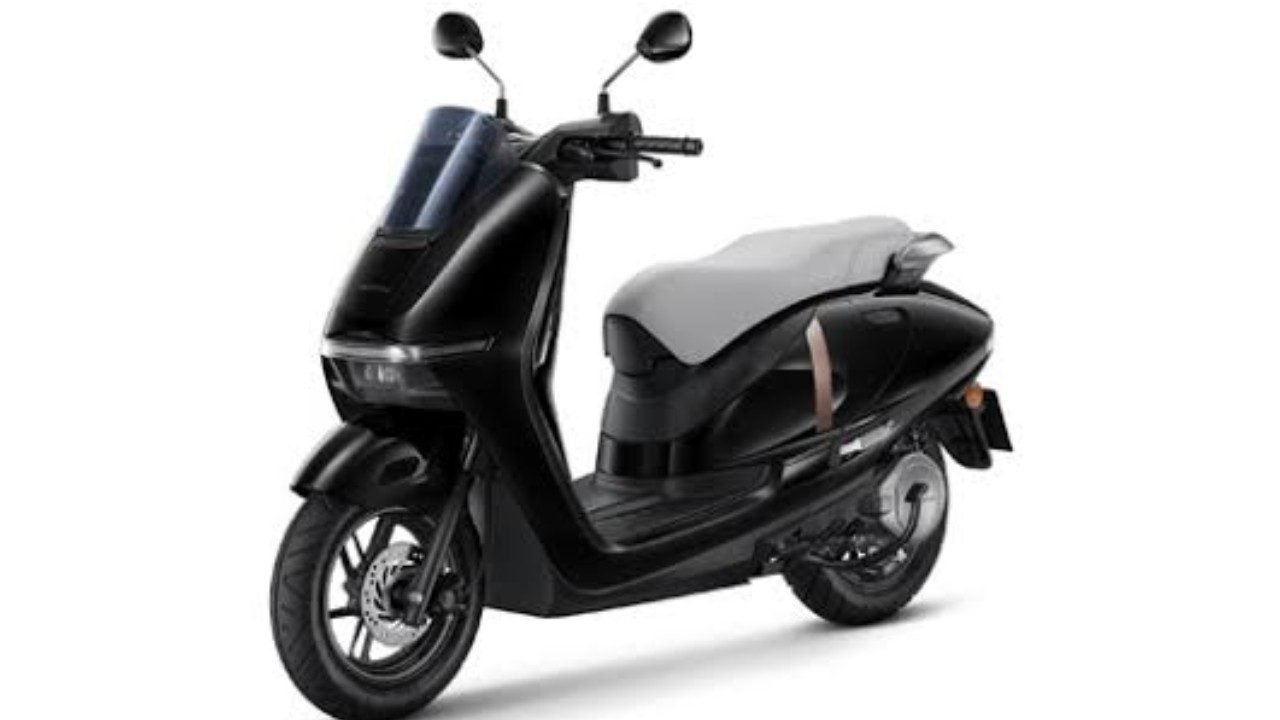
Honda has filed a design patent for its UC3 electric scooter in India, and the timing alone is enough to get speculation going. The scooter is already on sale in Thailand and Vietnam, and its arrival in India's patent office raises the obvious question every scooter buyer will be asking: is this actually coming here, or is it just paperwork?
The honest answer is that a patent filing doesn't guarantee anything. Honda routinely files intellectual property protection for scooters and motorcycles it has no immediate plans to launch in India — it's a defensive move as much as a preview of what's coming. Still, with India being the world's largest two-wheeler market, a patent filing on a model already proven in other markets is always worth paying attention to.
What Makes the UC3 Genuinely Different
Here's the technical detail that separates the UC3 from Honda's existing India EV lineup. Unlike the Activa e, which runs on Honda's swappable Mobile Power Pack system, the UC3 uses a fixed 3.17kWh battery — and it's reportedly Honda's first electric scooter to adopt lithium iron phosphate (LFP) chemistry rather than the more common NMC cells.
That chemistry choice matters for longevity. LFP batteries typically deliver over 2,000 charge cycles, meaning the pack should comfortably outlast a scooter's first ownership period — a genuinely different value proposition than swappable-battery systems, which trade some of that longevity focus for charging convenience.
The Numbers on Paper
Honda claims a WMTC-tested range of 122km on a single charge, achieved through an 8bhp, 6.0kW in-house-developed motor capable of 80km/h top speed — performance the company says is comparable to a 160cc petrol scooter. Acceleration reaches 20 metres in roughly 3 seconds.
Those figures put the UC3 in a similar bracket to established players like the Ola S1 Air and TVS iQube, rather than at the top of the segment. Real-world range, as with most claimed figures, will likely land somewhat lower — realistically closer to 90-100km depending on riding conditions and load.
Feature Set and Charging
The UC3 comes with bi-chromatic LED headlights, a 5-inch TFT instrument cluster running Honda RoadSync connectivity, traction control, 26 litres of underseat storage, three riding modes (Econ, Standard, Sport), reverse assist, adaptive regeneration that adjusts based on battery percentage, a Smart Key with keyless access, and a USB Type-C port.
Charging tops out at 1200W, and the scooter rides on 12-inch wheels front and rear with Combined Braking System rather than ABS — a spec choice that suggests Honda is positioning it as a value-focused, mainstream commuter rather than a premium flagship.
Why India Launching the UC3 Isn't Straightforward
Here's the strategic complication worth understanding. Honda's current Indian EV strategy is built almost entirely around the Activa e and its Battery-as-a-Service model, which depends on swappable-battery infrastructure. Introducing the UC3 alongside it would mean running two genuinely different electric platforms simultaneously — fixed battery and swappable battery — under the same brand.
That's not a trivial decision. It complicates dealer technician training, spare parts inventory, and service network planning, since technicians would need to be equipped to handle two fundamentally different battery systems rather than one streamlined approach.
What This Means for Buyers Right Now
For anyone specifically waiting on the UC3, the honest takeaway is: don't count on it yet. Patent filings in India happen well before — and sometimes entirely independent of — any actual launch decision. What this filing does confirm is that Honda is keeping its options open, protecting the design rights to a proven global product in case the calculus around a fixed-battery India launch changes.
If Honda does eventually bring the UC3 to India, it would give the brand a genuinely differentiated second electric scooter — one built for owners who'd rather charge at home on their own schedule than rely on a swap-station network, addressing a real gap for buyers in areas where swap infrastructure remains limited.
Have a tip on India's auto and EV space? Write to us at contact@techyrobber.com