
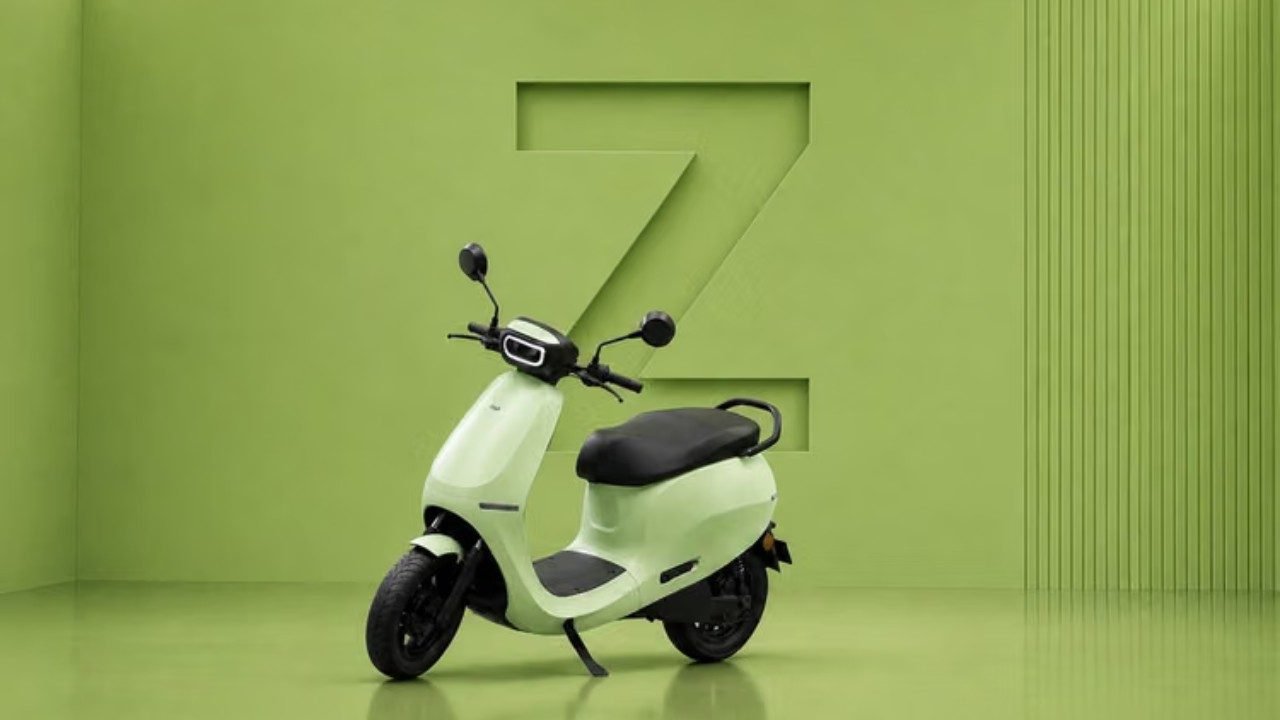
Ola Electric has launched the S1Z, and the headline isn't really the scooter itself — it's what's inside it. This is the first scooter range in India to bring the company's indigenously developed Bharat Cell LFP technology to the mass market, rather than reserving it for higher-end models.
Ola Electric is offering the S1Z in two battery variants: a 3.1kWh version at an introductory price of Rs 79,999, and a 5.1kWh version at Rs 99,999, both ex-showroom. The company says the smaller pack delivers up to 179km of IDC-rated range, while the larger one claims up to 301km.
Why the Battery Technology Matters More Than the Scooter
Here's the strategic significance behind this launch. The S1Z runs on Ola's 46-series lithium iron phosphate (LFP) cell platform, developed at the company's own Battery Innovation Centre and manufactured entirely at its Ola Gigafactory. That's a genuinely vertically integrated supply chain — Ola isn't buying battery cells from an external supplier and assembling them into a scooter; it's building the cells themselves, in-house, from the ground up.
That matters because battery cells are typically the single largest cost component of any electric vehicle. By manufacturing them domestically rather than sourcing them, Ola says it's been able to significantly lower that cost — and is now passing at least part of that saving directly into a mass-market product rather than keeping the technology exclusive to premium models.
What Ola's Chairman Said About the Strategy
Bhavish Aggarwal, Chairman and Managing Director of Ola Electric, framed the launch as a deliberate rejection of how the industry typically treats budget-segment vehicles. Posting on X, he said Ola Electric is setting a "new benchmark," adding: "The industry has always treated affordable scooters as stripped-down products: less range, less technology, more compromise. We've done the opposite."
Aggarwal emphasised that Ola has built the cell, motor, vehicle, software, and "every critical component" in-house, and that the company is passing the resulting technological advantage on to customers rather than keeping it as a premium-tier differentiator.
What Riders Actually Get
Beyond the battery, the S1Z runs on Ola's MoveOS 5 software platform, bringing cruise control, regenerative braking, reverse mode, GPS tracking, and over-the-air software updates. The scooter also supports geo-fencing, time-fencing, and mode-fencing, along with ride statistics and energy insights accessible through the Ola Electric app. An Easy Park feature is designed specifically to help riders manoeuvre the scooter in tight parking situations — a small but genuinely practical addition for dense urban environments.
The S1Z comes in four colour options — White, Anthracite, Sky Splash Blue, and Matcha Green — and rides on 12-inch wheels across both variants.
Deliveries Are Staggered, Not Simultaneous
Buyers should note the timeline split. Deliveries of the 3.1kWh variant are scheduled to begin in December 2026, while the larger 5.1kWh version won't start reaching customers until March 2027 — a meaningful gap for anyone specifically waiting on the longer-range option.
How the Market Reacted
The launch had an immediate, measurable market response. Ola Electric shares rose 6% in trading following the announcement, with the company confirming the launch details in an official BSE filing — a signal that investors read this as more than a routine product refresh.
Why This Positions Ola Differently in a Crowded Segment
India's mass-market electric scooter segment is where the real volume battle is happening, with rivals like TVS, Bajaj, Hero Vida, and Ather all competing hard for the same value-conscious buyers. Most of that competition has, until now, centred on price cuts and feature additions using externally sourced battery cells.
Ola's bet with the S1Z is different: rather than just competing on price, it's using proprietary, in-house battery manufacturing as the actual mechanism for reaching that lower price point, while still claiming a genuinely competitive range figure. Whether that vertical integration translates into a lasting cost advantage over rivals sourcing cells externally will likely become clearer as sales data from this segment rolls in over the coming months.
Have a tip on India's auto and EV space? Write to us at contact@techyrobber.com