
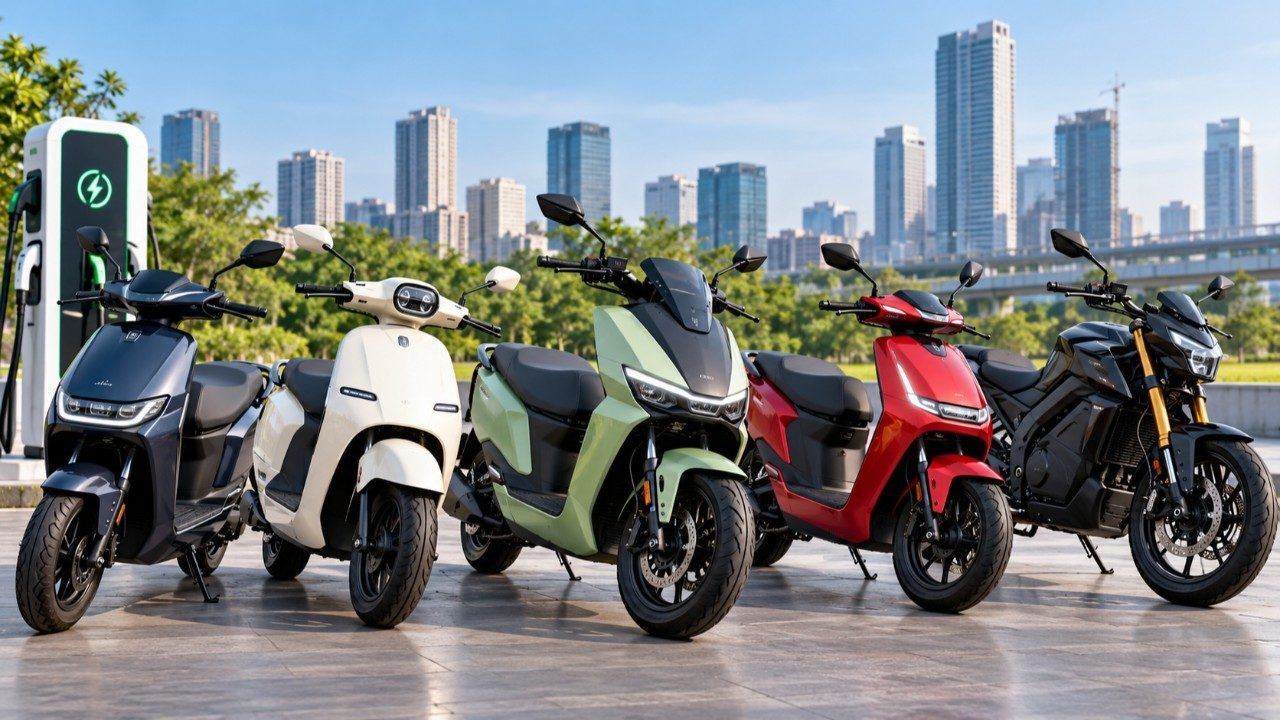
India's electric two-wheeler market has already surpassed its entire 2025 sales volume, with just nine months of 2026 gone. Cumulative registrations from January through September reached 15.61 lakh units, up roughly 62% year-on-year.
September's Numbers On Their Own
Monthly registrations rose over 12% from August to reach 2.07 lakh units in September, according to Vahan data. TVS Motor retained the top spot with 53,989 registrations, a 26.06-26.3% market share depending on the specific dataset consulted, up 9.55% from 49,284 units in August.
Bajaj Auto held second place with roughly 23.5% share, while Ather Energy secured approximately 14.7%. Hero MotoCorp's Vida brand took fourth with around 11.7% share. Both Bajaj and Hero posted genuinely strong monthly growth — 17% and 27% month-on-month respectively — the sharpest gains among the major players this month.
Why The Nine-Month Total Matters More Than Any Single Month
Here's the number that puts September in real context. Across January through September 2026, TVS Motor, Bajaj Auto, Ather Energy, and Hero MotoCorp together accounted for roughly 76% of all electric two-wheeler registrations in India. That's a genuinely concentrated market, with four manufacturers — all of them either legacy two-wheeler giants or well-established EV-first players — controlling the overwhelming majority of volume.
The Shift From Startups To Legacy Players
Worth understanding the underlying trend here. India's early electric two-wheeler boom was driven substantially by EV-focused startups building their businesses from scratch around electric-only products. That picture has changed. TVS and Bajaj have scaled their iQube and Chetak lines rapidly, while Hero MotoCorp has expanded its Vida portfolio and distribution footprint using the company's existing dealer network advantage.
Ola Electric's position in this month's breakdown — around 6.5% share — tells part of that same story from the other direction. A company that built its early identity specifically as an EV-first disruptor now sits behind all four of the legacy-adjacent players in monthly registrations.
Why Monthly Volatility Doesn't Change The Bigger Trend
Social media discussion and market commentary around TVS's position has occasionally focused on share dips in specific monthly snapshots — for instance, flagging a 24% sales decline and share slipping to 25.33% in one April comparison tied to subsidy transition effects under the PM E-DRIVE scheme. Those month-to-month fluctuations are real, but they sit within a broader FY26 pattern where TVS became the annual market leader, registering 3,40,758 units and 24.3% share, up from 20.7% the previous fiscal year — while Ola's own FY26 share fell to 11.7% from 29.2%.
What This Means For The Rest Of 2026
With nine months already exceeding all of 2025's volume, and festive season buying typically accelerating two-wheeler sales broadly across India, the final quarter of 2026 looks positioned to push the EV two-wheeler market meaningfully higher still. For buyers and dealers alike, the practical takeaway from September's numbers is that the competitive field has genuinely narrowed to four dominant players — meaning service network reach, dealer availability, and retail execution, not just product specs, are increasingly what separates monthly winners from the rest of the pack.
Have a tip on India's auto and EV space? Write to us at contact@techyrobber.com