
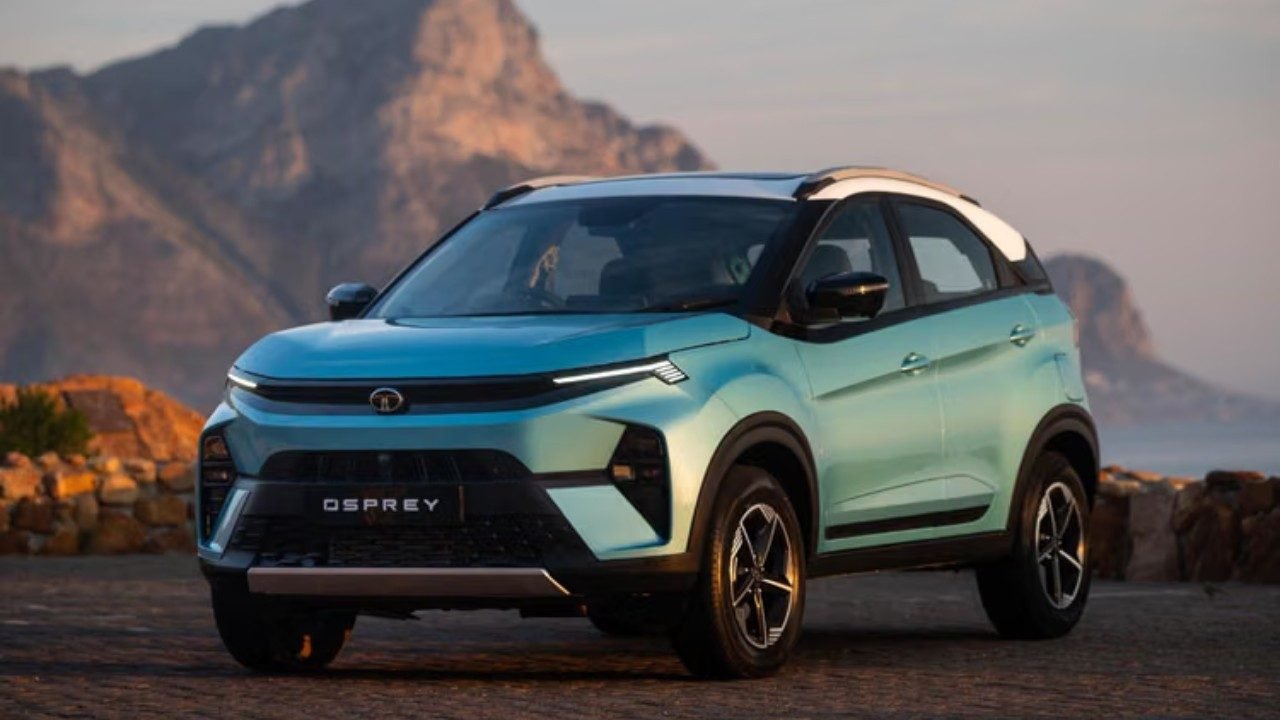
The Tata Nexon that's been a fixture on Indian roads for years now has a new identity in a completely different market. Tata Motors has launched the Nexon in South Africa under the name "Osprey," priced from ZAR 2,49,900 — roughly Rs 14.80 lakh.
It's the same fundamental SUV Indian buyers already know, brought to South Africa via the CBU (Completely Built Unit) export route, with most exterior features carrying over largely unchanged from the India-spec model. What's different is entirely the name and the market strategy wrapped around it.
Why Rebadge a Familiar Car at All
Here's the detail that makes this launch more interesting than a routine export. Tata Motors chose "Osprey" specifically after the migratory bird of prey — an animal known for endurance and agility, qualities the company is clearly hoping buyers associate with the SUV itself. Rebadging isn't unusual in global auto exports; local market research, existing naming conflicts, or cultural resonance often drive a manufacturer to pick a name that lands better with a specific audience than the original model name would.
That a genuinely well-established Indian nameplate needs a different identity to work in South Africa says something about how differently the same product can need to be positioned depending on the market it's entering.
A Deliberate Second Attempt at This Market
This launch isn't Tata's first run at South Africa. The company had previously exited the market back in 2019, before making a return last year. Since re-entering, Tata has steadily built out a genuine portfolio there, including the Harrier, Curvv, Punch, and Tiago, with the Osprey now joining that lineup as the latest addition.
That pattern — exit, reassess, return with a broader and more considered product range — is a meaningfully different approach than simply picking up where the company left off. It suggests Tata spent real time studying what went wrong the first time before committing to a second attempt.
Why This Fits a Larger Pattern
Here's the bigger context worth noting. Indian automakers have increasingly used the CBU export route to test new markets without the capital commitment of local manufacturing — the same approach Skoda uses for its Octavia RS in India, just running in the opposite direction. For Tata specifically, building out a diverse export portfolio across multiple international markets reduces dependence on any single market's demand cycle, spreading risk across a broader geographic base.
South Africa represents a genuinely strategic market for this kind of expansion: a developed auto retail infrastructure, right-hand-drive vehicles (matching India's own configuration, which simplifies export logistics), and growing demand for compact SUVs in exactly the segment the Nexon, er, Osprey, competes in.
What This Signals About Tata's Export Ambitions
A rebadged Nexon quietly entering a new market rarely makes major headlines on its own. But taken alongside Tata's other recent international moves — including its ongoing tender offer for Italy's Iveco, a much larger commercial vehicle acquisition — a pattern emerges of a company genuinely scaling its global ambitions beyond India's borders, rather than treating exports as a secondary revenue stream tacked onto a primarily domestic business.
For Indian automotive enthusiasts, there's a small point of pride buried in this story too: a genuinely Indian-designed and built SUV, competitive enough to be exported and sold under its own dedicated market identity in South Africa, reflects a level of product confidence that wasn't always a given for Indian-origin vehicles in international markets a decade ago.
Have a tip on India's auto and EV space? Write to us at contact@techyrobber.com