
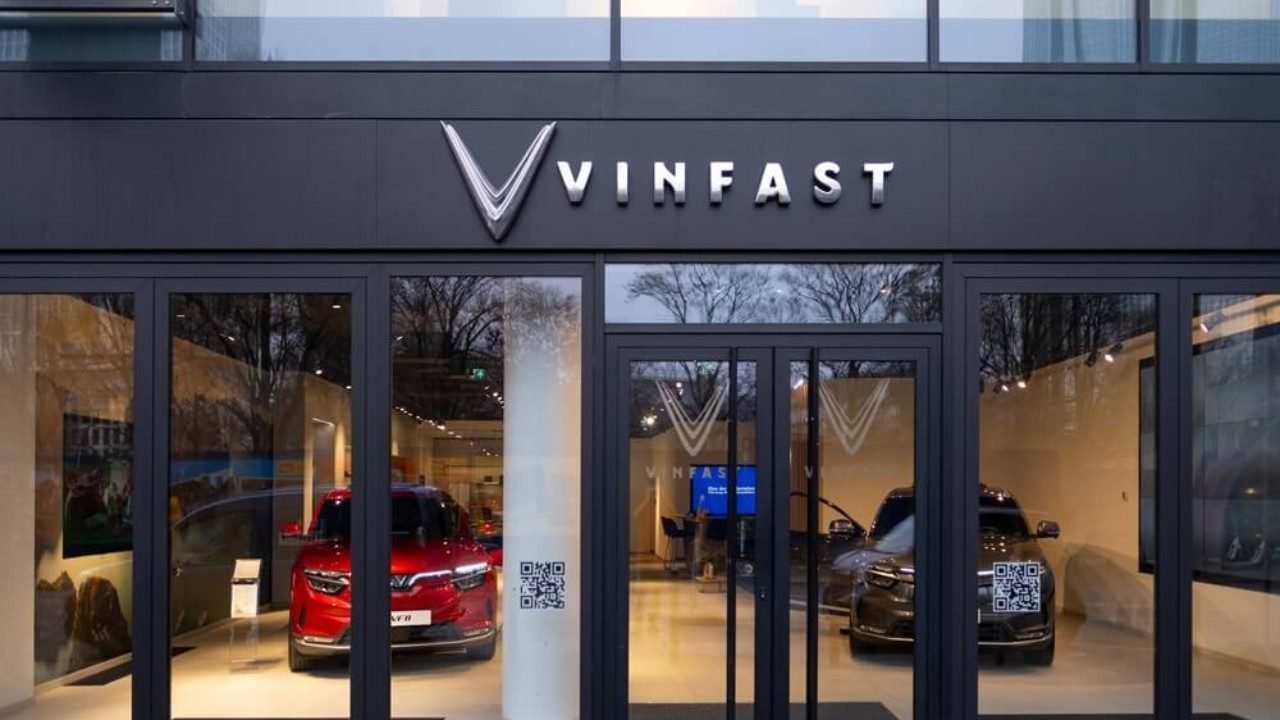
Here's a genuinely interesting contradiction in how VinFast is running its India business right now. Days after pausing deeper manufacturing localisation on three EV models, the company is simultaneously racing to expand its retail footprint — recently opening its 60th dealership in Patna and targeting 75 outlets across more than 60 cities by the end of 2026.
That's not really a contradiction once you look closer. It's two different bets, running on two different timelines, both aimed at the same underlying goal: making VinFast a viable long-term player in India's EV market.
Why the Retail Push Is Happening Now, Not Later
VinFast's Patna dealership is built as a 3S facility — sales, service, and spares all under one roof — and the company's expansion plan deliberately pushes beyond India's biggest metro markets into tier-2 and tier-3 cities. That's a meaningful strategic choice. Most new EV entrants concentrate their earliest retail presence in Delhi, Mumbai, Bengaluru, and a handful of other major metros, where charging infrastructure and EV awareness are already more developed.
VinFast is betting the opposite way: that genuine EV adoption growth over the next few years depends on making ownership feel accessible in smaller cities too, not just India's wealthiest urban centres.
The Financing Piece That Makes Expansion Possible
Scaling a dealer network this fast requires more than just finding retail partners willing to sign up. VinFast has signed a Memorandum of Understanding with Federal Bank specifically to provide tailored inventory financing for its dealer network — credit facilities that let dealers manage vehicle stock without tying up excessive capital of their own.
That detail matters more than it might initially seem. New dealerships need to hold meaningful vehicle inventory to serve walk-in customers, and that inventory ties up real money. Without dealer-friendly financing, expanding into smaller cities — where individual dealer partners often have less capital to deploy than established metro dealerships — becomes considerably harder. Federal Bank's Kumkum Jain framed the partnership as combining "VinFast's commitment to sustainable mobility with Federal Bank's expertise in dealer financing."
Why This Matters Alongside the Manufacturing Pause
Here's where this connects to our earlier coverage of VinFast's decision to pause deeper local component sourcing on the VF3, VF6, and VF7. Building genuine manufacturing localisation takes years and requires hitting specific cost targets before it makes financial sense to commit. Building a retail and service network, while still meaningful capital investment, moves on a considerably faster timeline and delivers more immediate customer-facing value.
In other words, VinFast appears to be sequencing its India strategy deliberately: fix the parts of the business that customers interact with directly — where to buy a car, where to get it serviced, how quickly a dealer can respond to demand — while taking more time to get the harder, more capital-intensive manufacturing localisation right rather than rushing it at an unsustainable cost.
What Buyers Actually Care About
There's a genuinely useful insight buried in how this story is being framed by industry observers: for many EV buyers, especially first-time ones, questions like "how should the battery be charged," "what does ownership actually cost," and "what happens when a software issue appears" often matter more day-to-day than a vehicle's on-paper specifications. A strong, accessible dealer network answers those questions directly, in a way a spec sheet never can.
That's precisely why dealer satisfaction studies have become an increasingly important signal in this market — they measure the actual relationship between an automaker and the people responsible for keeping customers happy long after the sale, not just how a car performs in a review.
What This Means for VinFast's India Bet
Taken together, VinFast's current strategy in India reads less like a company retreating and more like one recalibrating where to spend its resources first. Manufacturing localisation stays paused until the economics genuinely work. Retail and service infrastructure keeps expanding aggressively, because that's the part of the ownership experience buyers feel immediately, and the part that determines whether early customers become repeat advocates or vocal critics.
Whether that sequencing pays off will depend heavily on execution over the next year — a fast-growing dealer network only helps if the cars reaching those showrooms can actually compete on price and features once VinFast eventually resolves its localisation question.
Have a tip on India's auto and EV space? Write to us at contact@techyrobber.com