Numbers don't lie. And the number 700,000 tells a remarkable story about one of India's most beloved two-wheeler brands.
Bajaj Auto has confirmed that its Chetak electric scooter has crossed the 7 lakh cumulative sales milestone – a figure that would have seemed absurd just a few years ago when the Chetak was dismissed by many as an overpriced nostalgia exercise. More impressively, Bajaj has doubled its electric two-wheeler market share in just two years, going from a niche player to a genuine force in India's rapidly expanding EV ecosystem.
This isn't just a sales number. It's a case study in how a legacy brand can reinvent itself for the electric age – and it holds lessons for every automaker watching the Indian EV transition unfold.
The Journey – From Skepticism to 7 Lakh Units
When Bajaj relaunched the Chetak as an electric scooter in January 2020, the reaction was mixed. The original Chetak – a geared scooter that ruled Indian roads from the 1970s through the 1990s – was iconic. But the electric version was priced at over ₹1 lakh at a time when most electric scooters cost half that. It was available in only two cities. And the range was modest.
Critics said Bajaj was selling nostalgia, not a product. They were partially right about the nostalgia part – but completely wrong about the product.
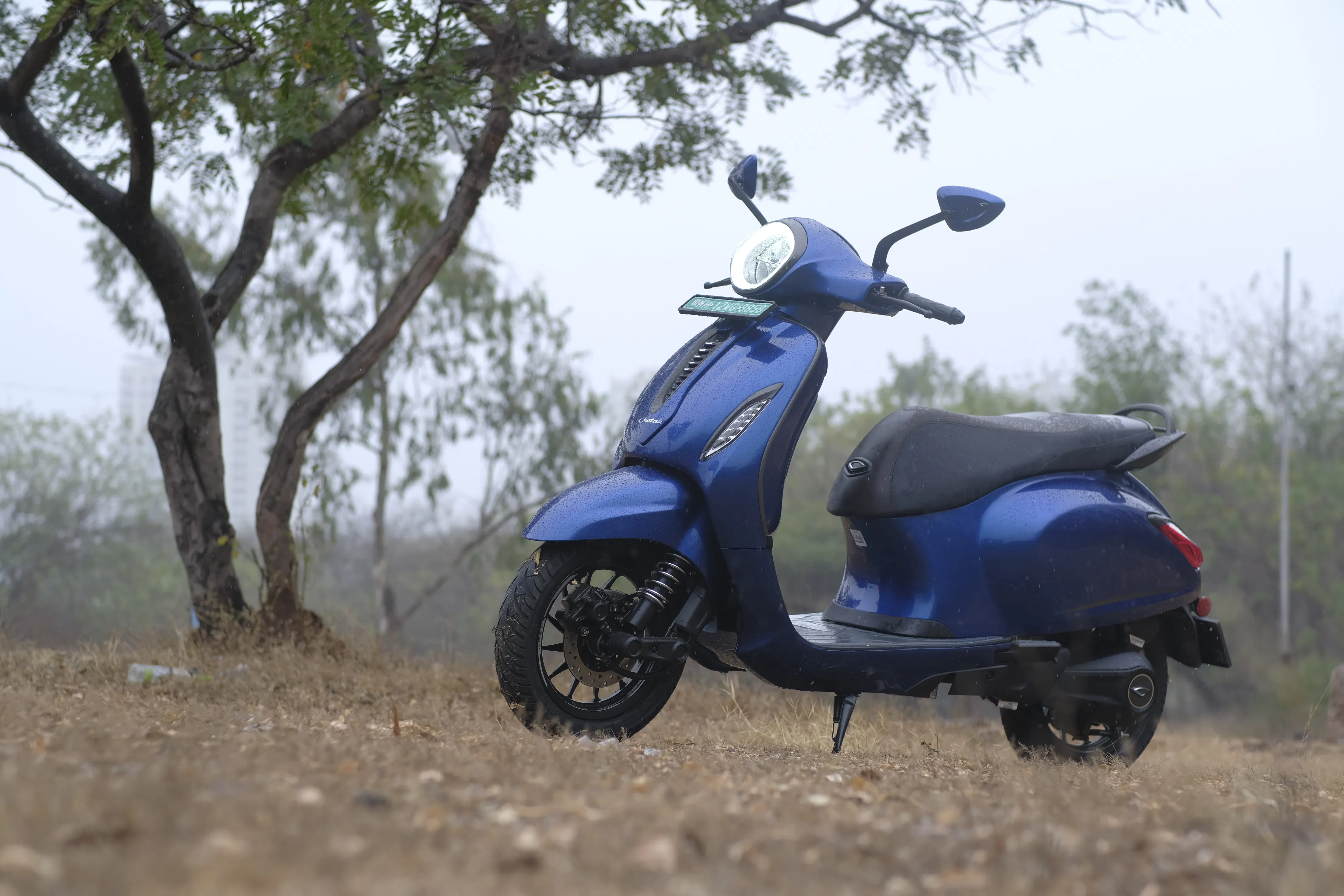
What Bajaj understood, and what many analysts missed, was that the Chetak wasn't competing with the cheapest electric scooter on the market. It was competing with the idea of what an electric scooter should feel like. The build quality was noticeably superior to most rivals. The metal body panels – in an era of all-plastic electric scooters – gave it a solidity that buyers could feel the moment they touched it. And the riding experience was refined in a way that justified the premium.
The strategy was slow and deliberate. Bajaj expanded availability city by city, variant by variant. The Chetak 2901 and subsequent models brought the price down without compromising the core product identity. The dealer network grew. Charging infrastructure improved. And gradually, the sales numbers started compounding.
Key milestones:
- 2020: Launch in Pune and Bangalore only
- 2022: Expanded to 20+ cities, crossed 50,000 sales
- 2023: Chetak 2901 launched at more accessible pricing
- 2024: Crossed 3 lakh cumulative sales
- 2025: Rapid acceleration, crossed 5 lakh
- 2026 (May): 7 lakh cumulative sales, market share doubled in two years
The Market Share Story – Doubling in Two Years
The headline number – doubling market share in two years – is even more impressive when you consider the context. India's electric two-wheeler market hasn't been standing still. It's been growing explosively, with new entrants flooding in every quarter. Ola Electric went from zero to market leader. Ather Energy expanded aggressively. TVS iQube scaled up production. Hero Vida entered the fray.
For Bajaj to double its share in a market that's simultaneously growing and getting more competitive means the Chetak isn't just keeping pace – it's outpacing the market growth rate. That requires both strong demand pull (people wanting the product) and supply readiness (Bajaj's ability to manufacture and deliver at scale).
Bajaj's Pune manufacturing facility has been scaling Chetak production steadily, and the company's existing dealer network – one of the largest in India – has been a massive distribution advantage. Unlike EV-only startups that had to build their service network from scratch, Bajaj simply activated its existing infrastructure.
Why Is the Chetak Winning?
In a market full of electric scooters making bold claims about range, speed, and features, the Chetak has succeeded by focusing on something more fundamental: trust.
Build quality that's visibly superior. The Chetak uses a metal body rather than full plastic. The fit and finish is noticeably tighter than most rivals. Paint quality, panel gaps, switch gear – everything feels like it belongs to a mature, established manufacturer. In a market where build quality complaints have plagued several EV startups, this matters enormously.
Riding experience that prioritises refinement. The Chetak doesn't have the fastest acceleration or the longest range in its class. What it has is a smooth, quiet, planted riding experience that makes daily commuting genuinely pleasant. The motor delivers power linearly without the jerky throttle response some competitors exhibit. The suspension is well-tuned for Indian roads. The brakes inspire confidence.
After-sales that actually works. This is perhaps Bajaj's biggest advantage. The Chetak is serviced through Bajaj's existing dealer network – the same network that services millions of Pulsar, Dominar, and Platina motorcycles. Spare parts availability, mechanic familiarity with the brand, and geographic coverage are all leagues ahead of EV-only startups that are still building out their service infrastructure.
Brand heritage that creates emotional pull. The Chetak name carries decades of goodwill. For buyers of a certain generation, the name alone creates a positive predisposition. Bajaj has been smart about leveraging this nostalgia without relying on it entirely – the product backs up the name.
The Competitive Landscape – Where Chetak Stands
| Brand/Model Cumulative Sales (Est.) Key Strength Key Challenge | |||
| Ola Electric S1 | 7+ Lakh | Aggressive pricing, app integration | Service network, quality complaints |
| Bajaj Chetak | 7 Lakh | Build quality, Bajaj network, trust | Limited variant range |
| TVS iQube | 5+ Lakh | TVS reliability, variant options | Premium pricing on top variants |
| Ather Energy | 3.5+ Lakh | Tech leadership, software updates | Limited geographic reach |
| Hero Vida V1 | 1.5+ Lakh | Hero service network | Late entrant, brand building needed |
The Chetak is now neck-and-neck with Ola Electric for cumulative sales leadership – a remarkable position considering Ola's far more aggressive pricing and marketing. The difference is that Bajaj has achieved this with fewer quality controversies and a more sustainable growth trajectory.
What This Means for the Electric Two-Wheeler Market
The Chetak's success validates several important principles for the Indian EV market:
Trust beats hype. In the early days of India's EV transition, the loudest brands got the most attention. But as the market matures, buyers are increasingly gravitating toward brands they trust for long-term reliability and service support. Bajaj's decades of two-wheeler manufacturing credibility is proving more durable than startup marketing budgets.
Legacy brands can adapt. There was a narrative that established automakers would be too slow to transition to EVs, and that nimble startups would eat their lunch. The Chetak proves that legacy brands with existing manufacturing capabilities, dealer networks, and brand equity can be formidable EV players – they just approach it differently.
Quality still wins. The Indian consumer's tolerance for subpar build quality in EVs is decreasing rapidly. Early adopters were willing to overlook fit-and-finish issues for the novelty of electric driving. Mainstream buyers are not. The Chetak's metal body and superior build quality are becoming competitive advantages rather than cost handicaps.
The market is big enough for multiple winners. Ola, Bajaj, TVS, and Ather are all growing simultaneously. This isn't a zero-sum game. The electric two-wheeler market is expanding fast enough to support multiple successful brands with differentiated positioning.
What's Next for the Chetak?
Bajaj has signalled that the Chetak lineup will continue to expand. Industry expectations include new variants with larger battery options for improved range, potentially a sportier Chetak variant targeting younger buyers, and continued geographic expansion into smaller cities and towns where the EV transition is just beginning.
The upcoming Bajaj Chetak updates expected in May 2026 could bring refreshed features and potentially a new price-to-performance variant that further strengthens the lineup's competitiveness.
Looking further ahead, Bajaj's partnership with KTM and its own EV platform development suggest that the Chetak could eventually be joined by electric motorcycles – extending the brand's EV story beyond scooters.
The Bottom Line
Seven lakh units of an electric scooter. Doubled market share in two years. Zero major quality scandals. A service network that actually works.
The Bajaj Chetak story isn't the flashiest narrative in India's EV transition. There are no viral launch events, no provocative tweets from founders, no billion-dollar IPO drama. What there is, instead, is a methodical, well-executed product strategy backed by 80 years of manufacturing credibility.
And as the numbers prove, that approach works just fine.
For auto industry analysis, EV market updates, and business coverage – keep visiting TechyRobber.com. Found this analysis useful? Share it with someone who's tracking India's EV revolution!