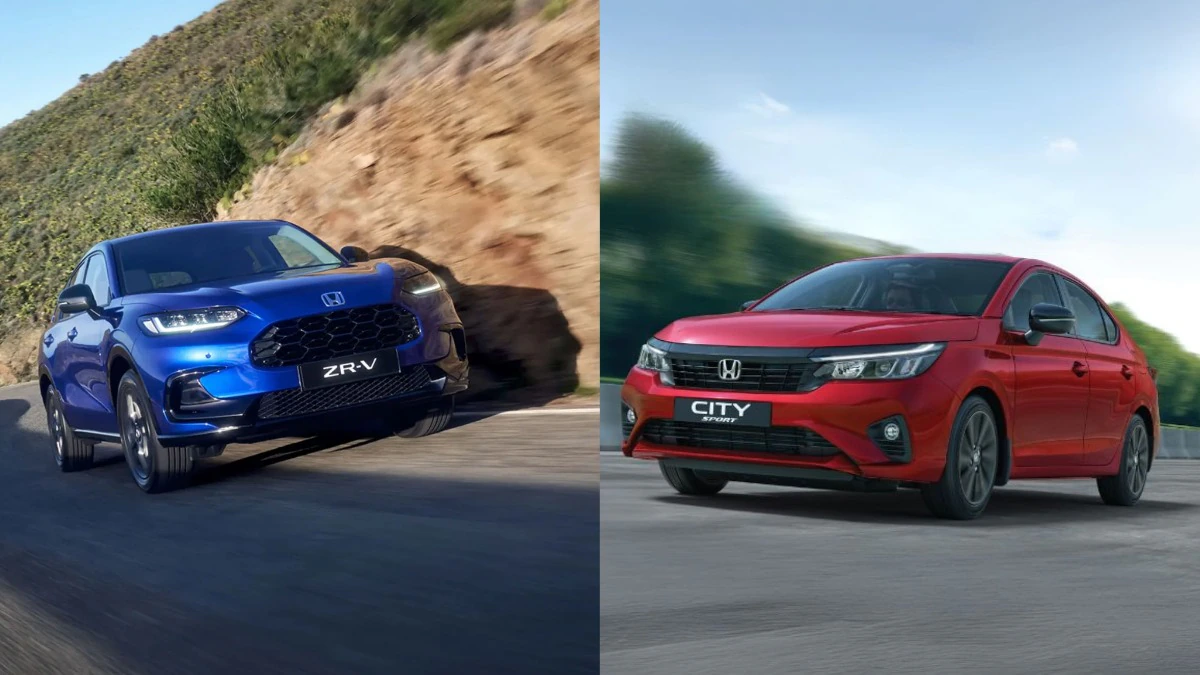
Honda is about to have its biggest day in India in years. On May 22, 2026, the Japanese automaker will launch not one but two vehicles simultaneously – the much-anticipated Honda City facelift and the all-new Honda ZR-V hybrid SUV. It's a bold move from a brand that's been unusually quiet in the Indian market lately, and it signals that Honda is done playing it safe.
The City facelift has already been spotted undisguised on Indian roads and its design was leaked online on May 13, giving us an almost complete picture of what's coming. Meanwhile, the ZR-V represents Honda's first serious attempt at cracking the premium SUV segment in India. Together, these two launches could reshape Honda's entire positioning in this market.
Let's break down everything we know about both vehicles.
Part 1: The 2026 Honda City Facelift
Why This Facelift Matters More Than Usual
The Honda City has been India's defining midsize sedan for over two decades. But let's be real – the current fifth-generation model, on sale since 2020 and lightly updated in 2023, has been losing ground to fresher rivals like the Hyundai Verna, Volkswagen Virtus, and Skoda Slavia. All three competitors received significant updates recently, and the City was starting to feel like it was standing still.
This facelift is Honda's response. It's the most comprehensive update the current-gen City has received, and it needs to hold the fort until the next-generation (sixth-gen) City arrives in 2028. That's at least two more years this version needs to stay competitive – and Honda clearly understands the urgency.
Exterior – A Sharper, More Aggressive Face
The leaked images and spy shots have revealed a heavily revised front fascia that gives the City a noticeably more modern and aggressive look.
Key design changes include a new honeycomb-pattern grille that replaces the chrome-heavy design of the current model. It's cleaner and more contemporary. The LED headlamps have been reshaped – they're slimmer and sharper, with integrated DRLs that flow into the grille for a connected, wide look. The front bumper has been completely redesigned with new angular inserts and a revised air dam with triangular pods on either side.
One subtle but meaningful change: the Honda badge has been repositioned above the grille instead of sitting on it. It's a small detail, but it gives the front end a cleaner, less cluttered appearance.
The side profile stays largely unchanged – it's still the clean, well-proportioned silhouette that defines the City. But higher variants are expected to get newly designed 16-inch diamond-cut alloy wheels that freshen things up.
At the rear, expect redesigned tail lamps, a revised bumper, and repositioned reflectors. The changes are evolutionary rather than revolutionary, but they do enough to make the car look noticeably updated from every angle.
Honda is also expected to introduce a few new colour options alongside the existing palette.
Interior – Where the Real Upgrades Are
The exterior changes are nice, but the cabin is where Honda has focused most of its effort. And rightfully so – this is where the City has been losing to rivals in recent comparison tests.
New features expected in the facelift:
The infotainment system is getting a significant upgrade. The current 8-inch touchscreen is expected to be replaced by a larger 10.25-inch unit, similar to the one found in the Honda Elevate. It will continue to support wireless Apple CarPlay and Android Auto.
The instrument cluster is also likely to get an update, potentially moving to a fully digital display instead of the current semi-digital setup. This alone would bring the City in line with what the Verna and Virtus already offer.
Ventilated front seats – arguably the most requested feature by City owners – are finally expected to make it to the top-spec variant. In a country where temperatures regularly cross 40°C, this has been a glaring omission until now.
A powered driver's seat with electronic adjustment is another expected addition, bringing a level of convenience that was missing from the current model.
The 360-degree camera is perhaps the biggest single feature addition. It's been borrowed from the Honda Elevate's hardware and will make parking significantly easier – especially in tight urban spaces where the City spends most of its time.
Features expected to carry over unchanged:
Honda isn't stripping anything out. The existing kit – which includes Level 2 ADAS via Honda Sensing (adaptive cruise control, lane keep assist, collision mitigation braking, automatic high beam), wireless phone charger, rear AC vents, automatic climate control, PM2.5 cabin air filter, ambient lighting, keyless entry, single-pane sunroof, and the 8-speaker sound system – is all expected to continue.
Honda Sensing remains one of the best ADAS suites in this segment, and its retention is a significant advantage over rivals that offer more basic driver-assistance packages.
Engine & Gearbox – No Changes, And That's Fine
Under the hood, nothing is changing. The City facelift will continue with its two powertrain options.
| Powertrain Type Power Torque Transmission | ||||
| 1.5L i-VTEC Petrol | Naturally Aspirated | 121 PS | 145 Nm | 6-speed MT / CVT |
| 1.5L e:HEV Hybrid | Strong Hybrid | 126 PS | e-CVT | e-CVT (auto only) |
The petrol engine is refined, efficient, and perfectly suited to the City's character. The hybrid, meanwhile, remains one of the most fuel-efficient powertrains available in any sedan in India – real-world figures consistently touch 20+ kmpl in city driving. For buyers who do high daily kilometres, the hybrid's running cost advantage is substantial over the sedan's lifetime.
Expected Pricing
The current City petrol ranges from ₹12.07 lakh to ₹16.07 lakh, while the hybrid sits at approximately ₹20 lakh (all ex-showroom). With the added features, Honda is expected to increase prices by ₹15,000 to ₹60,000 depending on the variant. That keeps the City competitive without pushing it into uncomfortable territory.
Competition Check
| Model Starting Price Key Advantage | ||
| Honda City Facelift | ~₹12.50 Lakh | ADAS, hybrid option, brand trust |
| Hyundai Verna | ~₹11.00 Lakh | Feature-rich, turbo engine option |
| Volkswagen Virtus | ~₹11.50 Lakh | Driving dynamics, build quality |
| Skoda Slavia | ~₹11.50 Lakh | Turbo performance, European feel |
The City's trump cards remain its Honda Sensing ADAS suite (the most comprehensive in the segment), the hybrid powertrain option (which no rival offers), and Honda's legendary reliability and low maintenance costs. The facelift adds the features it was missing – ventilated seats, 360-degree camera, larger screen – to close the gap with the Verna's spec sheet.
Part 2: The Honda ZR-V – Honda's Premium Hybrid SUV
While the City facelift is an important refresh, the Honda ZR-V is the more exciting story. This is Honda's entry into the premium SUV segment in India, and it represents a completely new chapter for the brand.
What Is the ZR-V?
The ZR-V is a midsize premium hybrid SUV that sits above the Honda Elevate in Honda's global lineup. In India, it will arrive as a CBU (Completely Built Unit) import, which means it will be fully imported from Japan and will carry the associated tax premium.
Think of it as Honda's answer to the Volkswagen Tiguan and Skoda Kodiaq – a premium, well-engineered SUV for buyers who want something beyond the mass-market options but don't want to go full luxury.
Engine & Hybrid System
The ZR-V is expected to be powered by a 2.0-litre petrol-hybrid system paired with an e-CVT transmission. This is a strong hybrid setup – the electric motor does significant heavy lifting during city driving, switching seamlessly to petrol power when needed. Expect combined output in the region of 180-190 PS, which is adequate for a vehicle of this size and positioning.
Size & Dimensions
The ZR-V measures approximately 4,568 mm in length, making it a proper midsize SUV. It's a 5-seater – Honda has prioritized cabin space and comfort over adding a cramped third row, which is the right call at this price point.
Expected Price & Positioning
As a CBU import, the ZR-V is expected to land between ₹40-50 lakh (ex-showroom). That's a significant premium over the mass-market SUVs, but it puts the ZR-V in direct competition with the Tiguan and Kodiaq – both of which have proven that Indian buyers are willing to pay for a premium SUV experience when the product is right.
Why It Matters for Honda India
Honda has been criticised for years for having a thin product portfolio in India. The brand essentially relied on three models – City, Amaze, and Elevate – while competitors flooded the market with SUVs across every price point. The ZR-V is Honda's first step toward changing that narrative. It tells the market that Honda is serious about the SUV segment, and that more products are coming.
May 22 – A Day That Could Redefine Honda India
When Honda takes the stage on May 22, the stakes couldn't be higher. The City facelift needs to reclaim lost ground in the midsize sedan segment. The ZR-V needs to establish Honda as a credible player in the premium SUV space. And the overall message needs to convince Indian buyers that Honda isn't just coasting on legacy – it's actively investing in this market.
The early signs are promising. The City facelift addresses every major criticism of the current model while retaining everything that's always made the City special. The ZR-V brings a product to India that genuinely has no direct Honda equivalent today.
Whether these launches translate into sustained sales momentum will depend on execution – pricing, availability, after-sales support, and marketing. But as a statement of intent, May 22 is exactly the kind of day Honda India needed.
We'll be covering both launches live on the day. Stay tuned.
For the latest car launches, honest reviews, and auto industry coverage – keep visiting TechyRobber.com. If you know a Honda fan who's been waiting for this news, share this article with them!