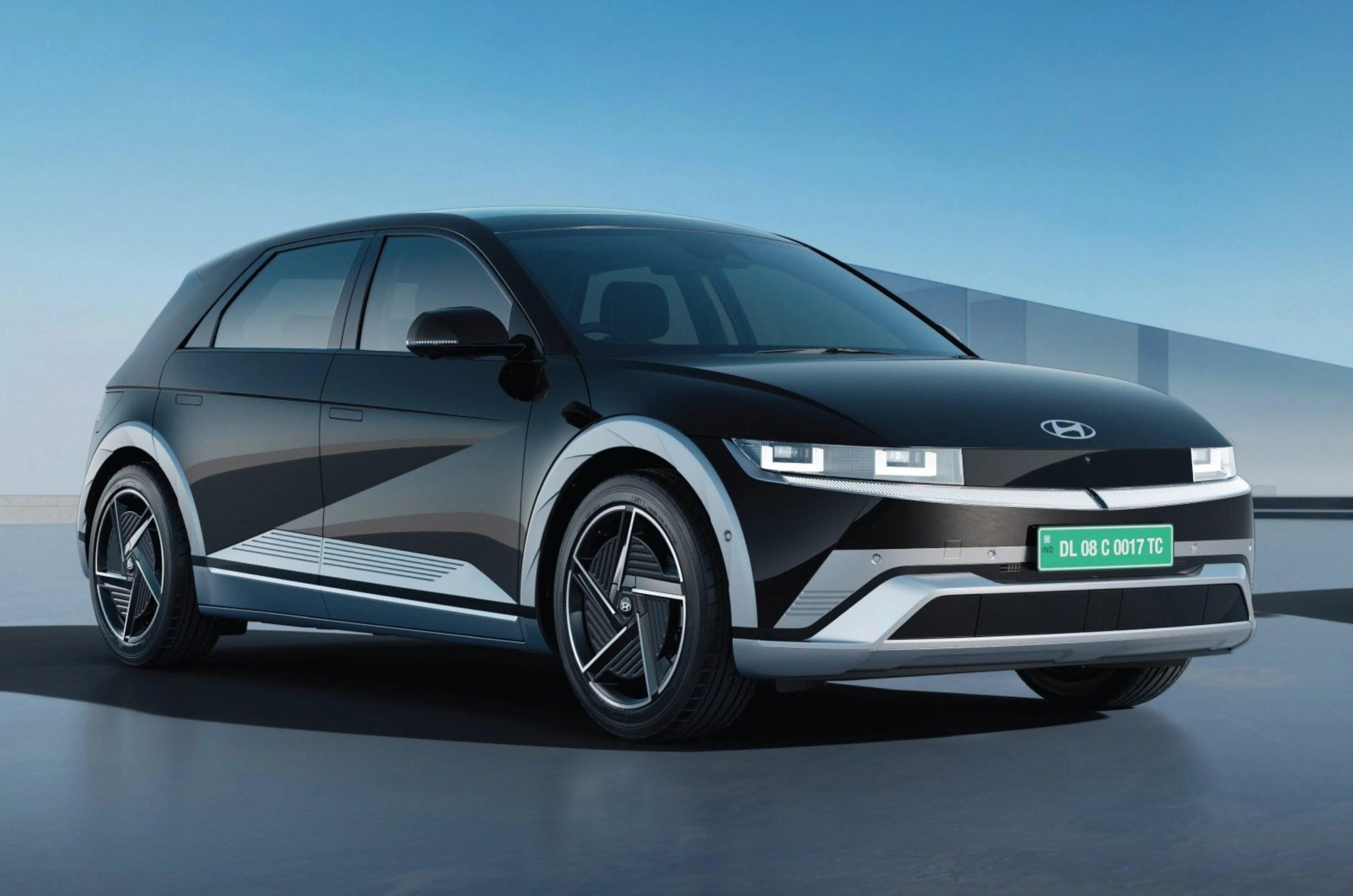
The Hyundai Ioniq 5 has always been a bit of an oddball in the Indian car market. It's not the cheapest premium EV you can buy. It was never designed to sell in massive numbers. And yet, every time you see one on the road, you can't help but stare. There's something about its retro-futuristic design that makes it stand out in a sea of generic-looking crossovers.
Now, Hyundai has given its flagship electric vehicle a mid-life refresh, and the 2026 Ioniq 5 facelift has officially gone on sale in India at ₹55.70 lakh (ex-showroom). That's roughly ₹10 lakh more than what the pre-facelift model cost. A significant jump, no doubt.
But here's what you're getting for that extra money – a bigger 84 kWh battery replacing the old 72.6 kWh unit, a claimed ARAI range of 690 km on a single charge, updated exterior styling, a reworked cabin, and a bunch of new tech features. The question is: does all of this justify a ₹10 lakh price increase, or has Hyundai pushed it too far?
Let's get into it.
What's New on the Outside?
If you're expecting a dramatic visual overhaul, you'll need to look closely. The Ioniq 5 facelift is an evolution, not a revolution. The overall silhouette – that distinctive hatchback-meets-crossover shape – remains identical. Hyundai wisely didn't mess with the design language that made the Ioniq 5 iconic in the first place.
That said, there are noticeable changes when you pay attention.
The front bumper has been redesigned with a more open look and now features a V-shaped garnish that adds a bit more visual interest to the face. New front skid plates give it a slightly more rugged appearance. The rear bumper has also been reworked, and there's a taller rear spoiler – 50 mm longer than before – which Hyundai says improves aerodynamic efficiency.
The biggest visual change is arguably the new alloy wheels. They feature a black finish with white accents, moving away from the lighter design of the outgoing model. It's a small thing, but wheels can dramatically alter how a car looks, and these give the Ioniq 5 a sportier vibe.
Dimensionally, the facelift is 20 mm longer than before (4,655 mm vs 4,635 mm), thanks to the revised bumpers. Everything else – width, height, wheelbase – stays the same. It still rides on a generous 3,000 mm wheelbase, which is one of the longest in its segment and directly responsible for the absurdly spacious cabin.
The colour palette has been refreshed too. You now get four options: Gravity Gold Matte (the standout), Midnight Black Pearl, Titan Grey, and Optic White.
Inside the Cabin – More Buttons, Better Layout
This is where the facelift brings more meaningful changes. Hyundai has clearly listened to feedback from owners and critics alike, and the result is a cabin that's more usable and better thought-out than before.
New Interior Theme
The lighter beige interior is gone. The 2026 Ioniq 5 now comes exclusively in an Obsidian Black theme. It looks more premium and, let's be practical, it'll hide dirt and wear much better than the old beige option did. Depending on the variant, you also get Black, Grey, and Dark Green colour choices for the top trim.
Updated Steering Wheel
The old two-spoke steering wheel has been replaced by a new three-spoke unit wrapped in leather. It features Hyundai's illuminated pixel dot design – a subtle nod to the car's retro-meets-future aesthetic – and comes with a heating function for colder mornings. It's a small upgrade that makes a noticeable difference in how the car feels from the driver's seat.
Physical Buttons Are Back
Here's a change that genuinely improves everyday usability. Hyundai has added dedicated physical buttons on the centre console for seat heating and ventilation. In the pre-facelift model, you had to navigate through the touchscreen to access these functions – annoying when you're driving. The new buttons are a welcome return to common sense.
Repositioned Wireless Charger
The wireless phone charger has been moved to the upper section of the centre console, making it easier to access. The cup holders have also been revised for better practicality. Small changes, but ones that show Hyundai has been paying attention to what real owners actually complain about.
Dual 12.3-Inch Screens with New Software
The dual 12.3-inch display setup carries over – one for the infotainment system, one for the digital driver's display. But the software running them has been upgraded. Hyundai's new Connected Car Navigation Cockpit (ccNC) platform brings improved graphics, faster responses, and over-the-air (OTA) updates so the system can be improved remotely without a dealership visit.
You also now get wireless Android Auto and Apple CarPlay – something that should have been there from the start, honestly – along with in-car payment support for EV charging. That last one is genuinely useful: you can pay for public charging sessions directly through the infotainment system without fumbling for apps on your phone.
Other Notable Feature Additions
- Remote immobilisation through Bluelink – if your car is stolen, Hyundai can remotely disable it
- Remote Smart Parking Assist 2 (RSPA2) – the car can park itself while you stand outside and watch
- Parking Collision-Avoidance Assist (Rear) – new addition to the safety suite
- Parking Distance Warning – improved sensors for tighter spots
- 8-way powered driver's seat with lumbar support
- 60/40 split rear seats for cargo flexibility
- Dual-zone automatic climate control
- Four driving modes – Eco, Normal, Sport, and Snow
The Main Event – 84 kWh Battery and 690 km Range
Let's be real: this is why most people will care about the facelift. The battery upgrade is the single most important change Hyundai has made.
The old Ioniq 5 came with a 72.6 kWh battery that delivered around 631 km of ARAI-certified range. The 2026 facelift replaces it with a larger 84 kWh unit, pushing the claimed range to 690 km (ARAI). That's an improvement of roughly 59 km on paper.
Now, let's talk real-world numbers, because that's what actually matters. The pre-facelift Ioniq 5 consistently delivered around 450-510 km in real-world mixed driving conditions, depending on how you drive and what kind of roads you're on. With the bigger battery, you can reasonably expect the facelift to push that into the 480-540 km range in similar conditions. That's a meaningful improvement, especially for people who do occasional intercity trips.
Powertrain Specs
| Specification Detail | |
| Battery Pack | 84 kWh |
| Motor Type | Permanent Magnet Synchronous (PMS) |
| Drivetrain | Rear-Wheel Drive (RWD) |
| Power | ~225 PS (India-spec figures pending official confirmation) |
| Claimed Range | 690 km (ARAI) |
| DC Fast Charging | 350 kW (10-80% in ~18 minutes) |
| AC Charging | 10-100% in ~7.5 hours |
| Platform | Hyundai E-GMP (800V architecture) |
That 350 kW DC fast charging capability is still one of the Ioniq 5's biggest trump cards. If you can find a compatible fast charger, going from 10% to 80% takes roughly 18 minutes. That's faster than most people take to finish a coffee break on a highway stop. The 800V architecture also means the charging hardware is genuinely future-proof.
One thing to note: Hyundai currently offers the Ioniq 5 in India only as a single-motor RWD model. There's no all-wheel-drive option yet. The Kia EV6, which shares the same platform, does offer AWD – so that's a consideration if you want maximum traction.
Safety – Comprehensive and Updated
Hyundai has always been generous with safety features on the Ioniq 5, and the facelift adds a few more to the list.
The full safety kit includes:
- 6 airbags
- Blind-Spot Collision Warning (BCW) with steering haptic feedback
- Blind-Spot Collision-Avoidance Assist (BCA)
- Lane Keeping Assist (second-generation)
- Forward Collision-Avoidance Assist
- Parking Collision-Avoidance Assist (Rear) – new for the facelift
- Remote Smart Parking Assist 2 (RSPA2)
- Electronic Stability Control (ESC)
- Tyre Pressure Monitoring System (TPMS)
- Hands-On Detection (HOD) steering wheel – ensures the driver stays attentive
- Anti-theft system with remote immobilisation
The updated ADAS suite is one of the most comprehensive in this price bracket. It's not quite autonomous, but it provides a genuinely helpful layer of assistance on highways and in parking situations.
How It Stacks Up Against the Competition
At ₹55.70 lakh, the Ioniq 5 facelift is no longer the most affordable option in the premium EV space. Here's how it compares:
| Model Price (Ex-Showroom) Battery Claimed Range Drive | ||||
| Hyundai Ioniq 5 Facelift | ₹55.70 Lakh | 84 kWh | 690 km (ARAI) | RWD |
| Kia EV6 | ~₹65 Lakh | 77.4 kWh | 708 km (ARAI) | AWD |
| Tesla Model Y | ~₹41-55 Lakh | 60-82 kWh | Up to 681 km | RWD / AWD |
| BYD Sealion 7 | ~₹45 Lakh | 82.56 kWh | 542 km | RWD / AWD |
| BMW iX1 LWB | ~₹50 Lakh | 64.7 kWh | 440 km | FWD |
| Mercedes CLA Electric | ~₹55 Lakh | ~58 kWh | 792 km (claimed) | RWD |
Where the Ioniq 5 wins: Retro-futuristic design that nobody else offers, 800V architecture with 350 kW fast charging, spacious cabin with flat floor, excellent real-world range, and the most comprehensive connected car tech suite.
Where it struggles: The ₹10 lakh price hike puts it in uncomfortable territory. The Tesla Model Y offers more car for less money (and now comes in a 3-row long-wheelbase version). The BYD Sealion 7 undercuts it significantly while offering AWD. And the Mercedes CLA Electric matches its price but brings the three-pointed star badge cachet.
The ₹10 Lakh Question – Is It Worth the Premium?
This is the elephant in the room. The pre-facelift Ioniq 5 was priced at around ₹46 lakh, which made it feel like a reasonable entry into the premium EV world. At ₹55.70 lakh, it's competing against a completely different set of expectations.
Here's how to think about it:
It makes sense if you're buying the Ioniq 5 for what it uniquely offers – a design unlike anything else on the road, proven 800V charging architecture, genuinely usable 500+ km real-world range, Hyundai's strong service network, and a cabin that's more spacious than cars costing twice as much. If these things matter to you, the facelift is objectively better than the outgoing model in every measurable way.
It's harder to justify if you're purely comparing spec sheets and prices. The Tesla Model Y gives you more range, more space (in LWB form), and Autopilot functionality for potentially less money. The BYD Sealion 7 offers AWD and solid performance at a much lower starting price.
Ultimately, the Ioniq 5 was never meant to be a value proposition. It's a statement car – something that reflects a certain taste and sensibility. If that resonates with you, the facelift is the best version of that statement yet. If it doesn't, there are more practical alternatives out there.
Final Thoughts
The 2026 Hyundai Ioniq 5 facelift is exactly what a good mid-life update should be. It addresses the two biggest concerns about the outgoing model – range and cabin practicality – while keeping everything that made the original special. The design still turns heads. The 800V architecture still leads the segment. And the new 84 kWh battery genuinely changes the ownership experience by reducing the frequency of charging stops.
The challenge is the price. At ₹55.70 lakh, the Ioniq 5 is no longer an easy recommendation. It's a considered choice for a specific kind of buyer – someone who values design, technology, and brand experience over raw value-for-money metrics. For that buyer, this facelift is close to perfect.
For everyone else, the premium EV market in India has never had more options. And that's a good thing for all of us.
Stay plugged in for more EV reviews, launch updates, and honest auto coverage at TechyRobber.com. Found this breakdown useful? Share it with someone who's EV shopping!